• UniDistance Suisse

On 29 January 2026, the role of artificial intelligence in university education was the focus of a panel discussion at UniDistance Suisse. Lecturers, researchers and members of the university leadership engaged in dialogue with leading experts to discuss key questions surrounding the use of AI in higher education. The dialogue-based event was aimed at all those who wish not only to use artificial intelligence, but also to actively contribute to its responsible and critical shaping within the higher education context.

International expertise in dialogue

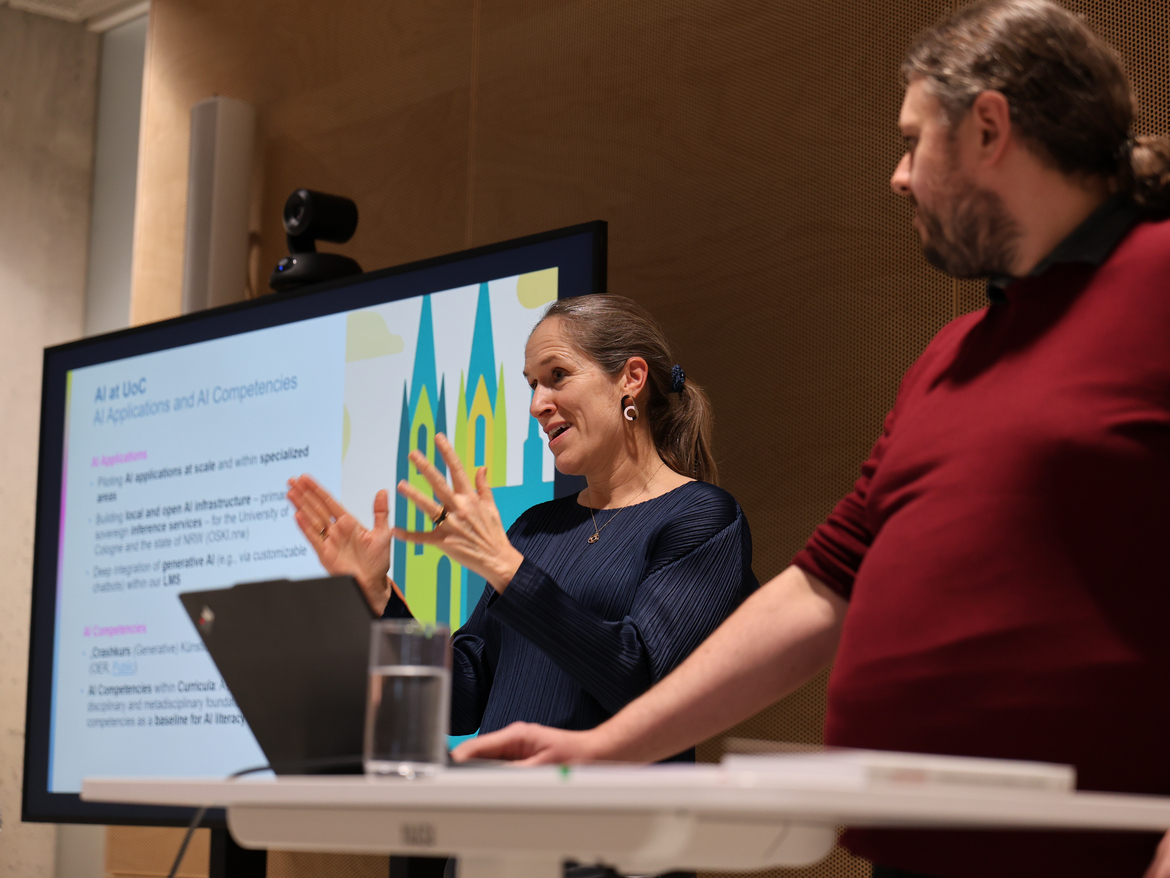
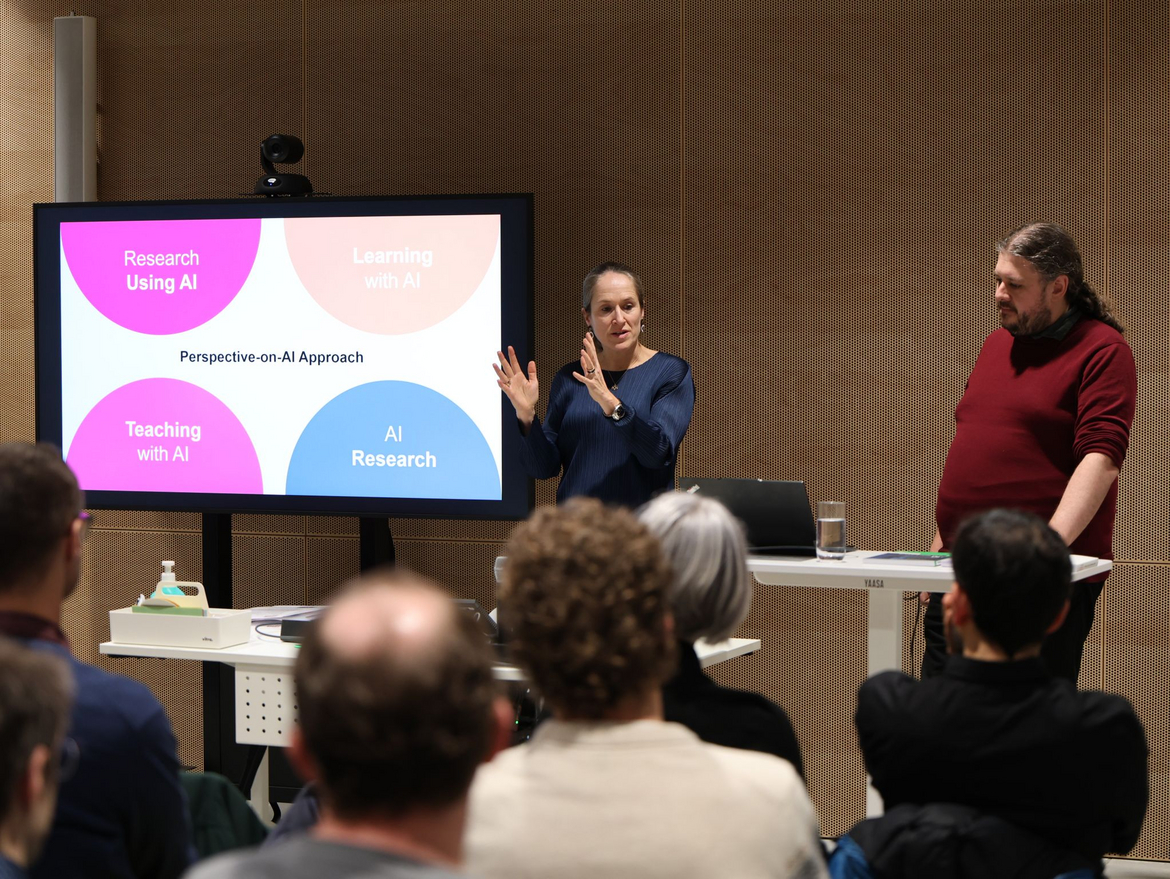
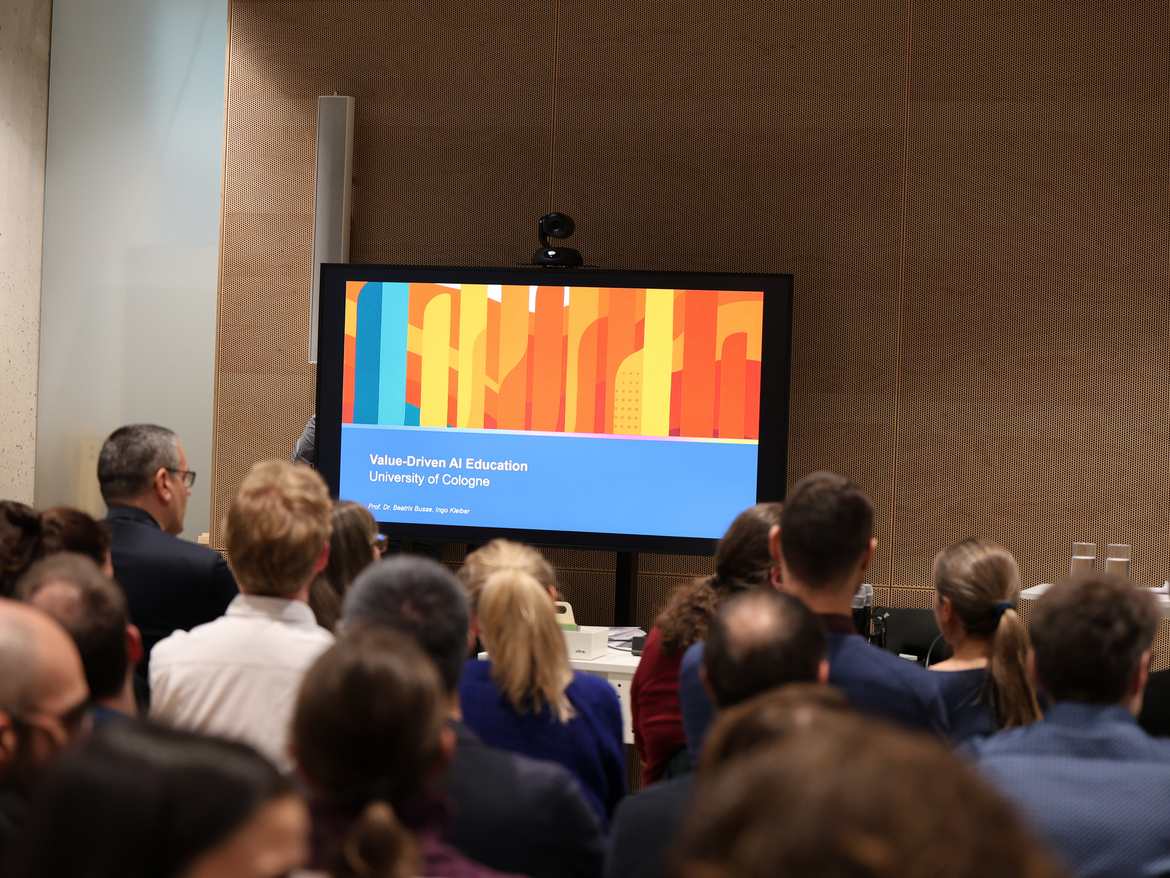
At the outset, the expert presentations provided a solid introduction to the topic. Prof. Dr Beatrix Busse, Vice-Rector for Teaching and Studies at the University of Cologne and responsible for the development of a university-wide AI strategy, together with Ingo Kleiber, Senior Expert for Digital Education and Educational Technology at the University of Cologne, emphasised the urgency of the issue: “Get ready for this transformation – now! We have to run.” Artificial intelligence, they noted, is fundamentally transforming higher education and, with it, learning itself. This transformation is irreversible, making it essential to engage proactively and in depth with both the opportunities and risks it entails. 

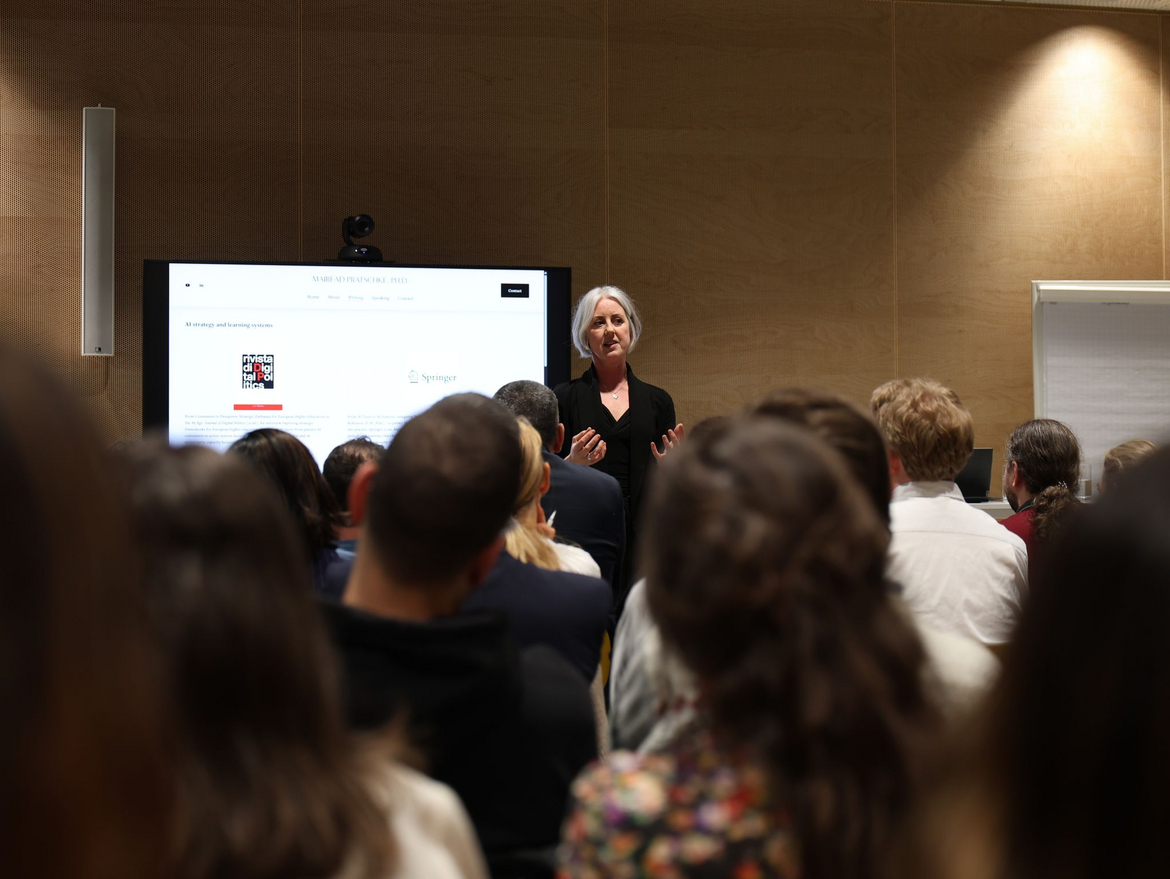
The subsequent presentation by Prof. Dr Mairéad Pratschke, an internationally active AI strategist and advisor in the fields of strategy, governance and education, further emphasised the need to actively engage with artificial intelligence. According to her, bans are unrealistic; what matters instead is to start developing a strategy swiftly, without waiting for supposedly perfect framework conditions. 

She also highlighted that a digital and agile institution such as UniDistance Suisse is particularly well positioned to engage with the future of learning. 


AI between potential and responsibility

The subsequent discussion enabled a multi-perspective exchange on current developments in (generative) artificial intelligence and their significance for higher education. The focus was on questions relating to how AI works and its impact on teaching, learning and research, as well as on the skills and institutional framework conditions that universities need when dealing with AI. 

Alongside the many opportunities – such as supporting learning processes or reducing workload in everyday academic life – ethical, didactic and organisational challenges were also discussed. These included issues of academic integrity, assessment and knowledge acquisition. It became clear that well-developed AI skills among students, combined with strong motivation to engage more deeply with learning content, can help promote a responsible use of AI. 

Institutional perspectives and strategic considerations

At the conclusion of the discussion, attention turned to the future. It became clear that universities are called upon to approach the use of artificial intelligence with a long-term perspective, to anchor it institutionally and to develop it collaboratively. Clear strategic guidelines are essential in this context, providing orientation while also leaving room for innovation and institution-specific developments. Rector Prof. Dr Nicolas Rothen underscored this responsibility: 

“For UniDistance Suisse, the task now is to continue integrating artificial intelligence into its institutional development in a structured, responsible and future-oriented manner. Questions of data sovereignty are just as central as the scientific reflection on how AI should evolve in research and teaching. Only in this way can its potential be harnessed in the long term and in line with our academic values.” 

AI policies in university-wide dialogue

The panel discussion formed part of an ongoing institutional engagement with questions surrounding the use of artificial intelligence and provided an appropriate framework for further in-depth reflection on AI policies. On the following day, a stakeholder consultation workshop took place, inviting representatives from all faculties and services to contribute their expertise to the development of an institutional framework for the use of AI at UniDistance Suisse. The consultation was supported by a delegation of experts from the University of Cologne. 

More news

[Students] Technical tips to prepare for an online exam

Read more

[Etudiants] Quelques gestes pour participer activement à un cours à distance

UniDistance Suisse Read more

Programm- und Rekrutierungsmanager/in in der Weiterbildung, 80-100%

UniDistance Suisse Read more

KI Applikationsentwickler:in (50 %)

UniDistance Suisse Read more

Autism and Emotions: Humor to regulate emotions

Psychology Read more