
On the occasion of its 2026 Teaching Day, UniDistance Suisse brought together professors, students, researchers, members of EDUDL+, and support service staff to discuss how learning is being transformed in the age of artificial intelligence. The event highlighted the institution's role in shaping the future of higher education through pedagogical innovation, research, and the development of critical thinking.

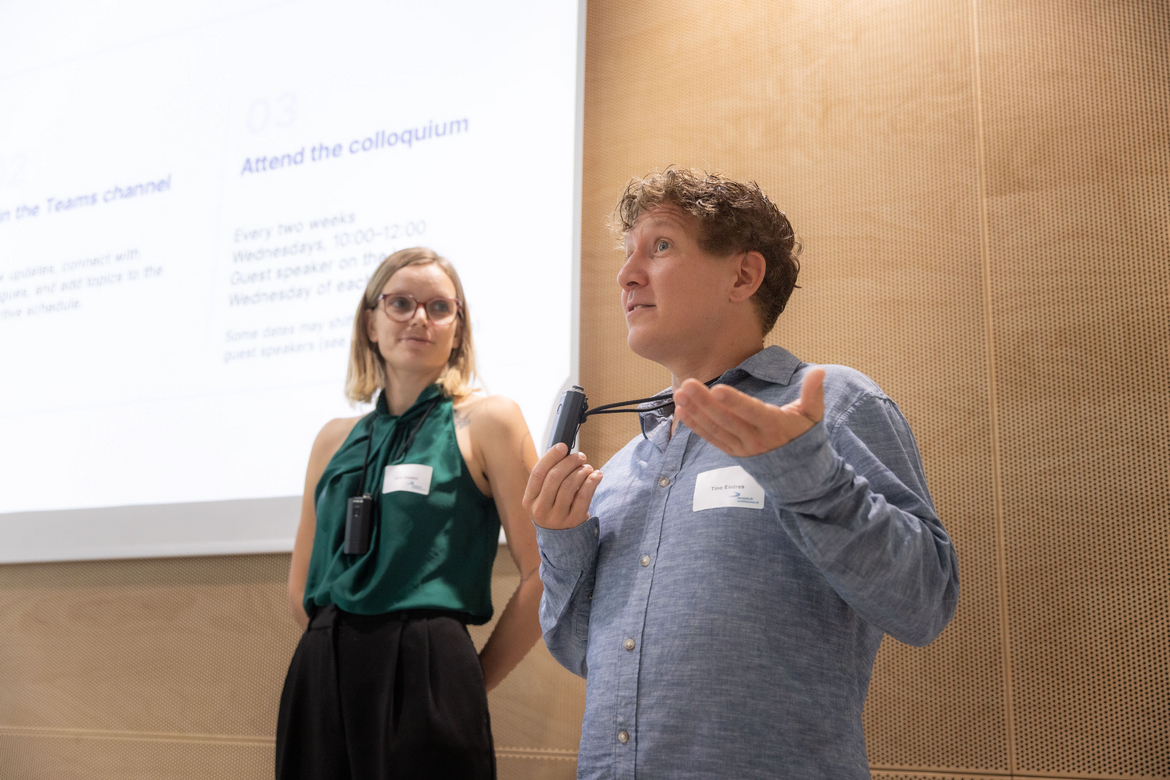
A key moment of the day was the presentation of the new research centre LIFT (Learning & Instruction with Future Technologies), co-directed by Julia Chatain, Assistant Professor in the Faculty of Mathematics and Computer Science, and Tino Endres, Associate Professor of Psychology at Swiss Distance University Institute. Dedicated to research on teaching and learning, this interdisciplinary centre aims to develop evidence-based educational practices that respond to ongoing technological developments.

Rethinking Learning in the Age of New Technologies

According to Julia Chatain, artificial intelligence has already become part of everyday university life. "As all our degree programmes are delivered online, AI is part of our environment." However, she believes its true significance lies elsewhere: “The rise of AI is not only prompting us to reconsider what knowledge should be taught. It is also pushing us to reflect on the most effective ways of learning and developing lasting competencies. In this context, the importance of an interdisciplinary approach is greater than ever.”

Through presentations, workshops, and demonstrations, participants explored innovative approaches designed to foster more active learning, increase student engagement, and rethink assessment methods. Discussions also focused on the use of AI as a tool to support understanding, practice, and learner autonomy.
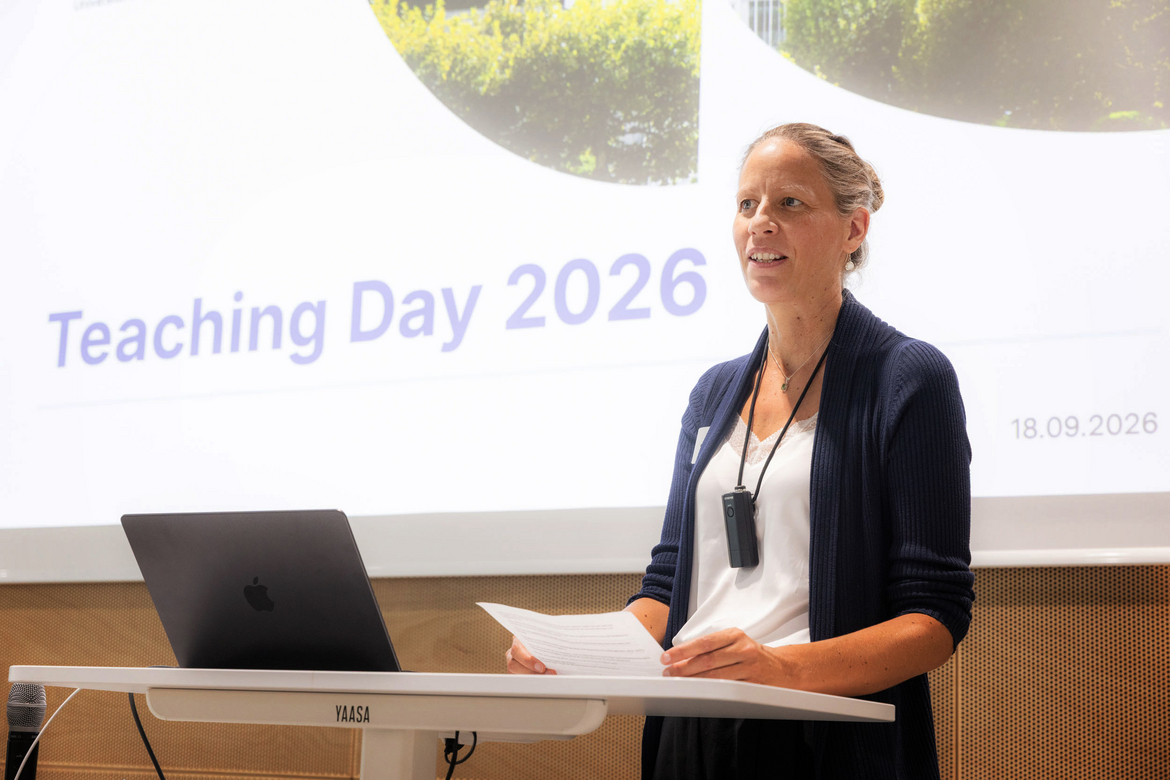

The exchanges highlighted an essential distinction in the age of AI: performing well does not necessarily mean learning. "Learning requires time and effort. AI can help us, but if we use it primarily to avoid that effort, we may also reduce opportunities to learn," noted Corinna Martarelli, Vice-Rector for Teaching. She added: “The challenge is therefore to use these technologies in ways that support learning rather than replace the processes that make learning possible.”

As an institution specialising in distance higher education, UniDIstance Suisse seeks to play an active role in shaping discussions on the future of learning. The Teaching Day once again demonstrated the value of bringing together professors, students, researchers, EDUDL+ members, and support staff to exchange perspectives and co-create innovative educational approaches. It reaffirmed the importance of harnessing new technologies while continuing to promote critical thinking, reasoning skills, and high-quality learning experiences. 

More news

[Students] Technical tips to prepare for an online exam [Etudiants] Quelques gestes pour participer activement à un cours à distance Assistent/in oder Postdoktorand/in im Privatrecht Lehrbeauftragte:r im Modul «Startups & Entrepreneurship, 10 ECTS» (18 %) Lecturer for the Module «Sports Management» 10 ECTS (18%)