Date: Tuesday, 1 December 2026
Time: 5:30 p.m., followed by an apéro from 6:30 p.m.
Venue: UniDistance Suisse campus in Brig, or online
Language: English
Registration: by 23 November 2026 (required for in-person attendance)


Date: Tuesday, 1 December 2026
Time: 5:30 p.m., followed by an apéro from 6:30 p.m.
Venue: UniDistance Suisse campus in Brig, or online
Language: English
Registration: by 23 November 2026 (required for in-person attendance)
How can we forecast the weather, estimate the spread of an epidemic, or optimize the operation of a technical system? Behind these applications lie mathematical models that help us better understand complex phenomena in our environment, simulate how they evolve, and, in certain cases, influence them in a targeted way.
In his inaugural lecture, titled “Understanding the World through Equations: Mathematical Modeling, Simulation, and Control of Complex Dynamical Systems,” Prof. Dr Matthias Voigt will show the central role mathematics plays in understanding and controlling complex dynamical systems.
Mathematical models are everywhere in our daily lives, even if they often remain hidden from view. They are used in many fields, from meteorology to economics and epidemiology to engineering. Using equations, they describe real-world phenomena, make it possible to predict how these phenomena will evolve, and help find ways to achieve specific goals.
Drawing on concrete examples, Matthias Voigt will explain how such models are developed, simulated, and optimized, and will also discuss their potential and their limitations. In particular, he will address model reduction, a method for simplifying complex mathematical systems so they are easier to simulate and use in practice. The inaugural lecture will also offer insights into his current research in this field.
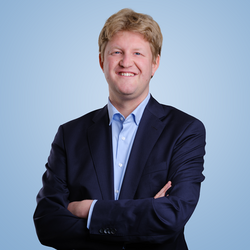
Matthias Voigt is Associate Professor and Vice-Dean of the Faculty of Mathematics and Computer Science at UniDistance Suisse. He received his doctorate from Otto von Guericke University Magdeburg in 2015, having written his doctoral thesis at the Max Planck Institute for Dynamics of Complex Technical Systems. He then worked at Technische Universität Berlin and the University of Hamburg before joining UniDistance Suisse as a tenure-track assistant professor in 2021. He was promoted to associate professor in 2026. His research focuses in particular on systems and control theory, numerical linear algebra, model reduction, and system identification.
 Faculty Manager à 60%, pour une durée déterminée de 3 ans
 Nula Frei in the «NZZ am Sonntag»: Who protects Switzerland’s federal autonomy?
 Specialised Collaborator, Faculty Services (50%)
 Corinna Martarelli on the TV programme «Quarks»: How boredom affects our perception of time
 Invitation to Professor Tino Endres' Inaugural Lecture