

Educational Psychology Lab
Faculty of Psychology

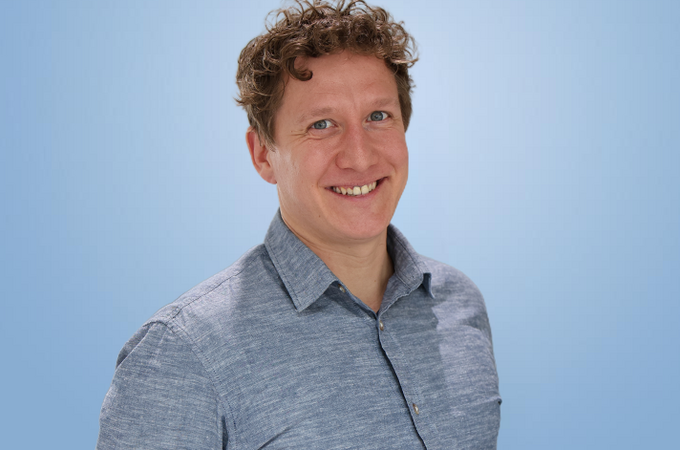
Tino Endres is an Associate Professor of Psychology at UniDistance Suisse. He directs the Educational Psychology Lab and conducts fundamental research on cognitive, motivational, and metacognitive processes related to learning with complex and digital materials.
Tino Endres is Associate Professor in Psychology at UniDistance Suisse and head of the Educational Psychology Lab. His research is use-inspired basic research on how people learn with complex materials. He focuses on retrieval practice, interest development, and self-regulated learning, with a particular interest in how cognitive, motivational, and metacognitive processes interact. In his work, he investigates how learning activities, instructional design, and digital learning environments can support lasting understanding in schools, higher education, and informal learning contexts. He studied psychology at the University of Innsbruck and the University of Freiburg, where he earned his bachelor’s, master’s, and PhD. During his doctoral work, he was an associated lab member in Shana Carpenter’s Learning and Cognition group at Iowa State University. Before joining UniDistance Suisse, he held research and teaching positions at the University of Zurich and the University of Freiburg.
Period | Position / stage |
|---|---|
Current | Associate Professor in Psychology, UniDistance Suisse; Head of the Educational Psychology Lab |
2024–present | Senior Teaching and Research Assistant, University of Zurich; Chair: Prof. Dr. Sascha Schneider |
2024–present | Senior Research Associate, University of Freiburg |
2020–2024 | Postdoctoral researcher, University of Freiburg; Chair: Prof. Dr. Alexander Renkl |
2020 | PhD in Psychology, University of Freiburg; dissertation: “Specificity and Enrichment in Retrieval Practice”; supervisor: Prof. Dr. Alexander Renkl; examiners: Prof. Dr. Alexander Renkl, Prof. Dr. Shana Carpenter, Prof. Dr. Andrea Kiesel |
2018–2020 | Research stay and associated lab member, Learning and Cognition, Iowa State University; supervisor: Prof. Dr. Shana Carpenter |
2016 | Research stay, University of Nebraska–Lincoln; supervisor: Prof. Dr. Kenneth Kiewra |
2014–2020 | Research and Teaching Assistant, University of Freiburg; PhD supervisor: Prof. Dr. Alexander Renkl |
2012–2014 | M.Sc. Psychology with Honors, University of Freiburg; thesis: “The Testing Effect”; examiner: Prof. Dr. Alexander Renkl |
2010–2012 | B.Sc. Psychology, University of Freiburg; thesis: “Teacher Competencies for Successful Group Work Planning”; examiner: Prof. Dr. Hans Spada |
2009–2010 | Psychology studies, University of Innsbruck |
My research is use-inspired basic research on how people learn with complex and often digital materials. I study learning activities that support durable understanding, especially when learners work with texts, explanations, videos, visualizations, or digital learning environments. A central aim of my work is to connect cognitive mechanisms with motivational and metacognitive processes and to translate this knowledge into instructional design.
Retrieval practice and generative learning
I investigate how retrieving, reconstructing, and elaborating knowledge can support meaningful and lasting learning. This includes work on constructive retrieval, question generation, feedback, and the combination of retrieval practice with generative learning activities.
Interest development and emotional design
A second line of research examines how interest, value, emotional design, and narrative frames influence sustained learning with complex materials, especially in multimedia and digital learning environments.
Self-regulated learning and metacognition
A third line focuses on how learners monitor, regulate, and adapt their learning. This includes research on mental effort, cognitive load, self-assessment, feedback, learning strategies, and digital tools for supporting self-regulated learning.

Faculty of Psychology
| B1 |
Pädagogische Psychologie I
Master of Science in Psychology
|
| B2 |
Pädagogische Psychologie II
Master of Science in Psychology
|
My teaching is grounded in the same principles that guide my research: learning should help students build transferable mental models, monitor their understanding, and apply psychological principles to real educational problems. I combine structured input with seminars, application tasks, formative assessment, feedback, and reflection. Across my courses, I emphasize the integration of cognitive, metacognitive, and motivational perspectives on learning.
I also supervise bachelor’s and master’s theses on topics connected to my research, including retrieval practice, interest development, self-regulated learning, metacognition, emotional design, and learning with complex digital materials.