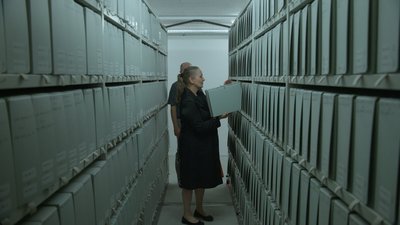
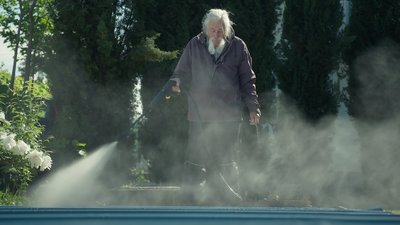
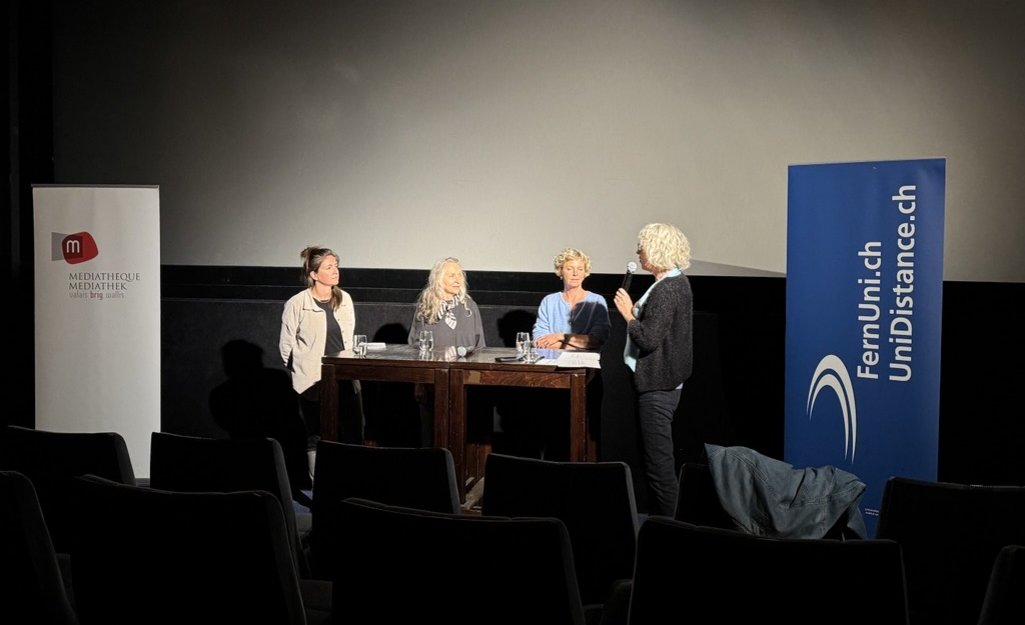
During the panel discussion, moderated by journalist Ruth Seeholzer, the themes explored in the film were examined from personal, historical and political perspectives. Director Corinne Kuenzli explained how her own family history had led her to explore the subject. Her encounters with those affected and her archival research gave her deeper insights into other family histories marked by exclusion, silence and traumatic experiences across generations.
Historian Tanja Rietmann, a lecturer at UniDistance Suisse and researcher at the Interdisciplinary Centre for Gender Studies at the University of Bern, placed these experiences in their historical context. In Switzerland, an estimated several hundred thousand adults and children were affected by coercive welfare measures and forced placements. While adults were often forcibly placed in institutions, children were frequently used as a source of cheap labour in agriculture. These practices involved serious violations of children's rights and human rights, while also reflecting the historical discrimination faced by unmarried women, particularly in matters of guardianship.
Another key topic was the process of coming to terms with this history in Valais. While Tanja Rietmann highlighted the lack of historical research into the situation in the canton, Claudia Alpiger, President of the Social Democratic Party of Upper Valais, addressed how society deals with difficult chapters of its past. The discussion also touched on the official apology already issued and the installation of a commemorative plaque in Sion. At the same time, it became clear that many questions remain unanswered regarding the historical examination of these events in Valais.