

On this page
Last update: 12.08.2026
Contributor: Communication and marketing
Interactivity
Objective
- The web is not a linear medium but a non-linear hypertext (a “connected” text): we only look for the information or action that interests us moving across different sections.
- We build our personal experience without necessarily following what the author proposes → active user.
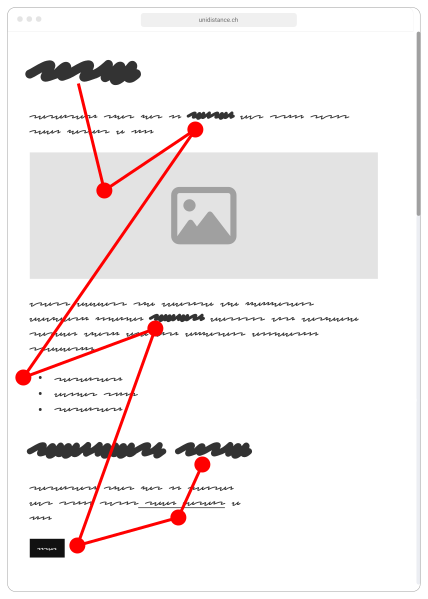
Users usually skim a web page by focusing on more visible elements (e.g. titles, visuals, CTAs, etc.).
Consultation mode
- Reading is mostly skimming (80%) rather than word-by-word (20%).
- The first 3 words of a title are key to gaining the reader's interest.
- On average we read 20% of the content of a web page and very quickly.
- Reading is on average 25% slower than with print.
- Reading is easily interrupted/broken (e.g., by visuals and CTAs that take up a lot of space).
- The entry point can vary (not necessarily via the homepage).
Accessibility
Medium
Users access the website via different devices (mobile, tablet, desktop with variable screen width) and with different connection speeds.
- Users have no overview of the page: only 22% of them scroll to the footer.
- Users might have issues with their connection or with the display of content on their screens.
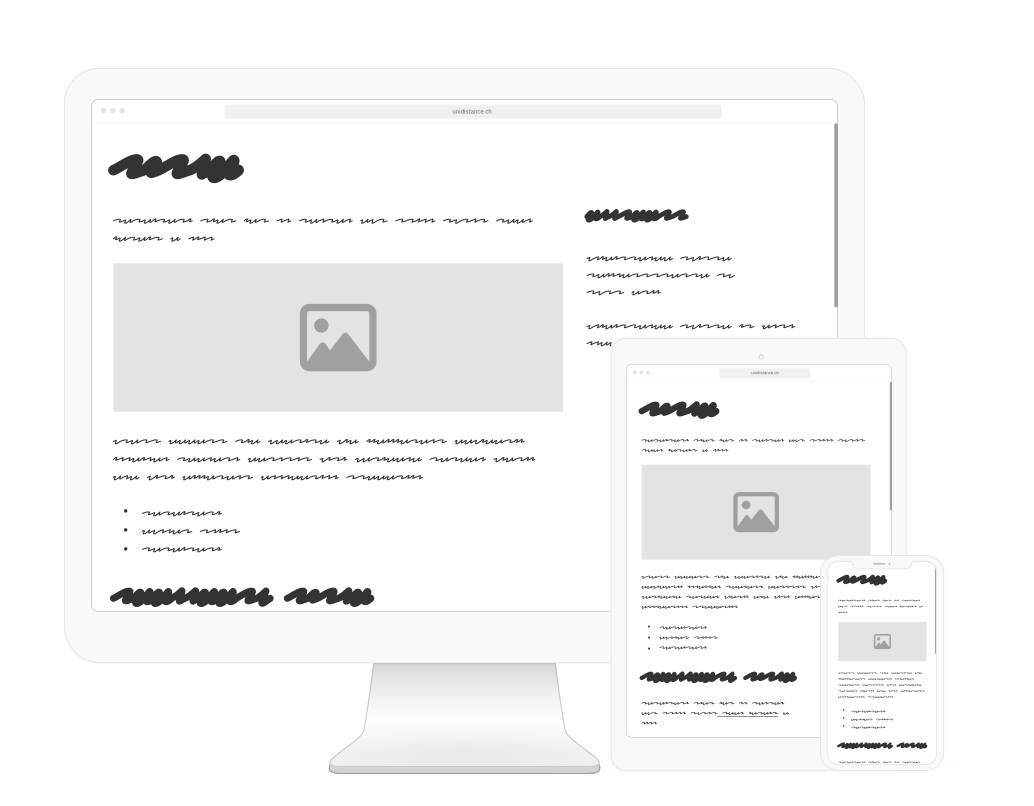
The same content is displayed differently on different devices.
Reading by visually impaired and blind people
- Screen readers normally read all content on the page.
- Screen readers do not interpret visual elements.
Information findability
- In order to easily find information, keywords must be well placed in the page (see SEO).
Structure
- Have an introduction that summarizes the rest of the page and a conclusion that invites users to take an action.
- Start with essential information and then continue to details (inverted-pyramid structure).
- Define text hierarchy (different kinds of titles and paragraphs) and use it consistently to let users skim through the page easily.
- Adds as many hyperlinks as necessary.
- Elements in the same page.
- Elements or whole pages elsewhere in the same website.
- Other language versions.
- External websites (of references, partners, etc.).
- No FAQ section - distribute content where it is most relevant.
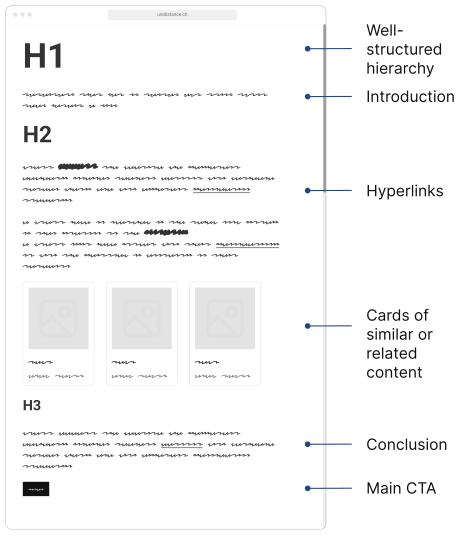
Example of a well-structured web page.
Rhythm
Alternate different kinds of blocks:
- Short and long paragraphs.
- Callouts, quotes.
- Images, videos, graphs.
- Small tables (avoid large tables that need horizontal scrolling on mobile).
Make content more dynamic through good formatting:
- Bullet lists.
- Bold text.
- Italics to indicate a title (e.g. of a paper) or to emphasise a word.
- No block capitals (difficult to read).
- No underlined text (might be confused with links).
- Left-align text, never center or right-align.
Make content visually appealing:
- Use icons (when pertinent).
- Highlight elements through hierarchy and colours (according to the graphic charter).
Avoid abusing any of the elements above, otherwise the page will look too dense.
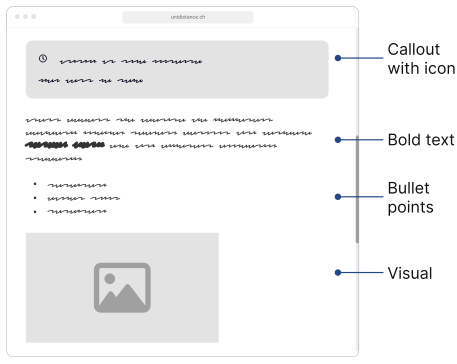
Examples of elements that add rhythm to a web page.
Last update 12.08.2026
Contributor Communication and marketing