
chEERS Lab
Faculty of Psychology

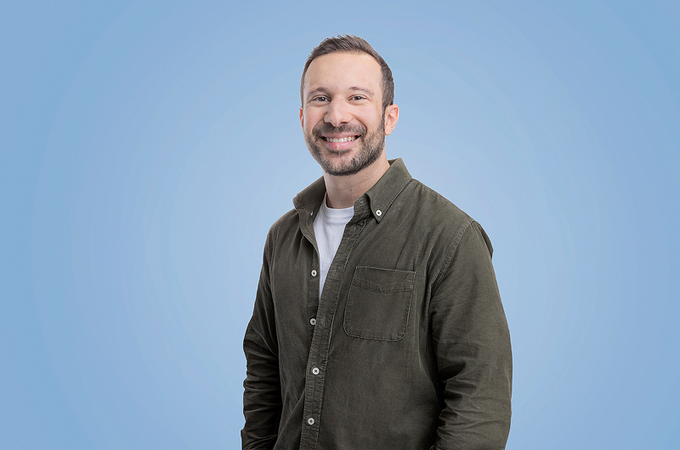
PhD candidate in Special Education and Affective Sciences, and Teaching and Research Assistant in Psychology at UniDistance Suisse. His research focuses on interpersonal emotion regulation in children and adolescents with neurodevelopmental conditions.
Sam Ahmad is a PhD candidate in the Department of Special Education at the University of Fribourg and a doctoral student at the Swiss Doctoral School in Affective Sciences (SDS), affiliated with the Swiss Center for Affective Sciences (CISA) at the University of Geneva. He is also a Teaching and Research Assistant in the Faculty of Psychology at UniDistance Suisse. He holds a Master's degree in Clinical Psychology from the University of Balamand (Lebanon) and a Master of Advanced Studies (MAS) in Health Psychology from the University of Fribourg. His research lies at the intersection of developmental psychology, special education, and affective sciences.
His doctoral research, supervised by Professors Andrea Samson and Carmen Zurbriggen, focuses on interpersonal emotion regulation in children and adolescents with neurodevelopmental conditions. Using a transdiagnostic and multimethod approach, he investigates how individuals' social environments contribute to emotion regulation and the processes that support socio-emotional development. His broader research interests include developmental psychology, emotion regulation, and attachment relationships.
At UniDistance Suisse, he contributes to teaching and research activities in developmental psychology, particularly within the undergraduate M03 Developmental Psychology module. He also supervises Master's thesis projects and contributes to research activities at CheersLab. Additionally, he has experience in university teaching, notably at the University of Fribourg and Paris 8 University, where he also supervised Master's theses.

Faculty of Psychology
| M03 |
Developmental psychology
Bachelor of Science in Psychology
|
| TOF1 |
Psychological well-being: from family to work
Master of Science in Psychology
|