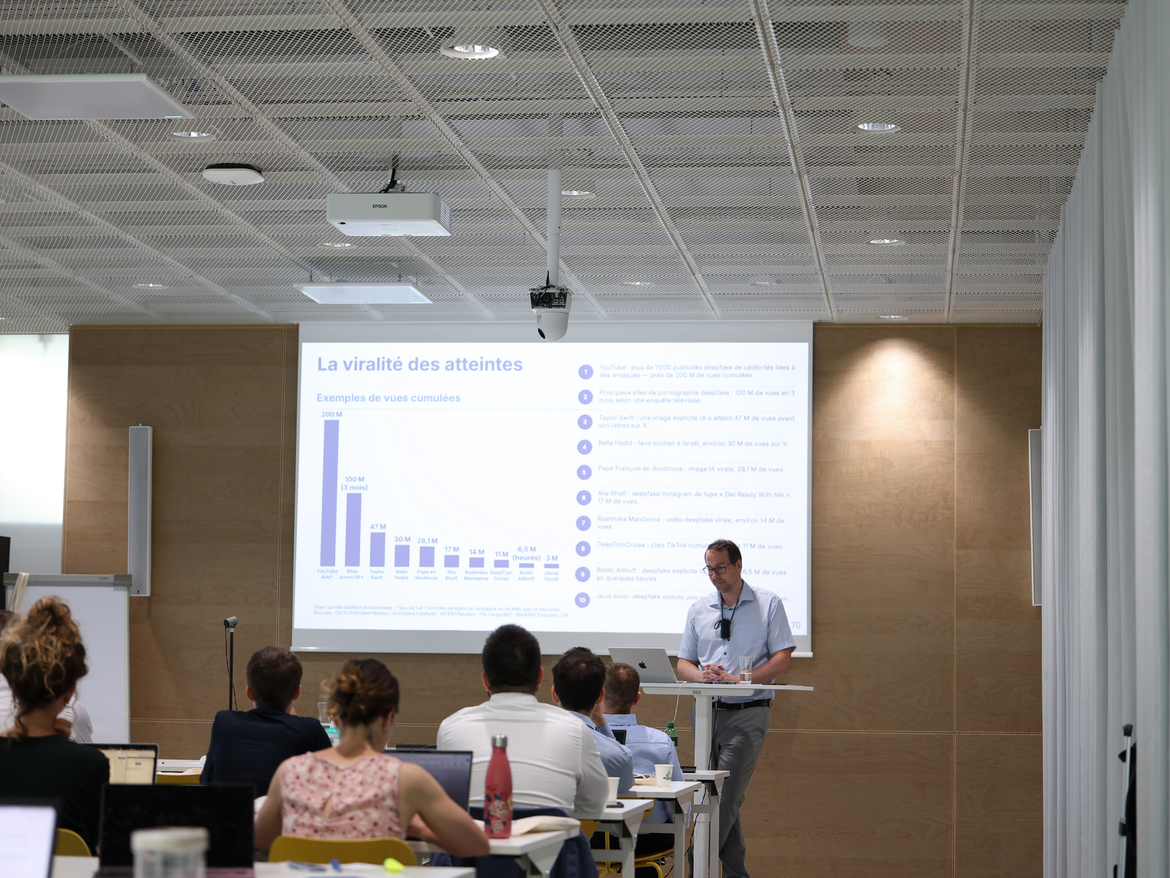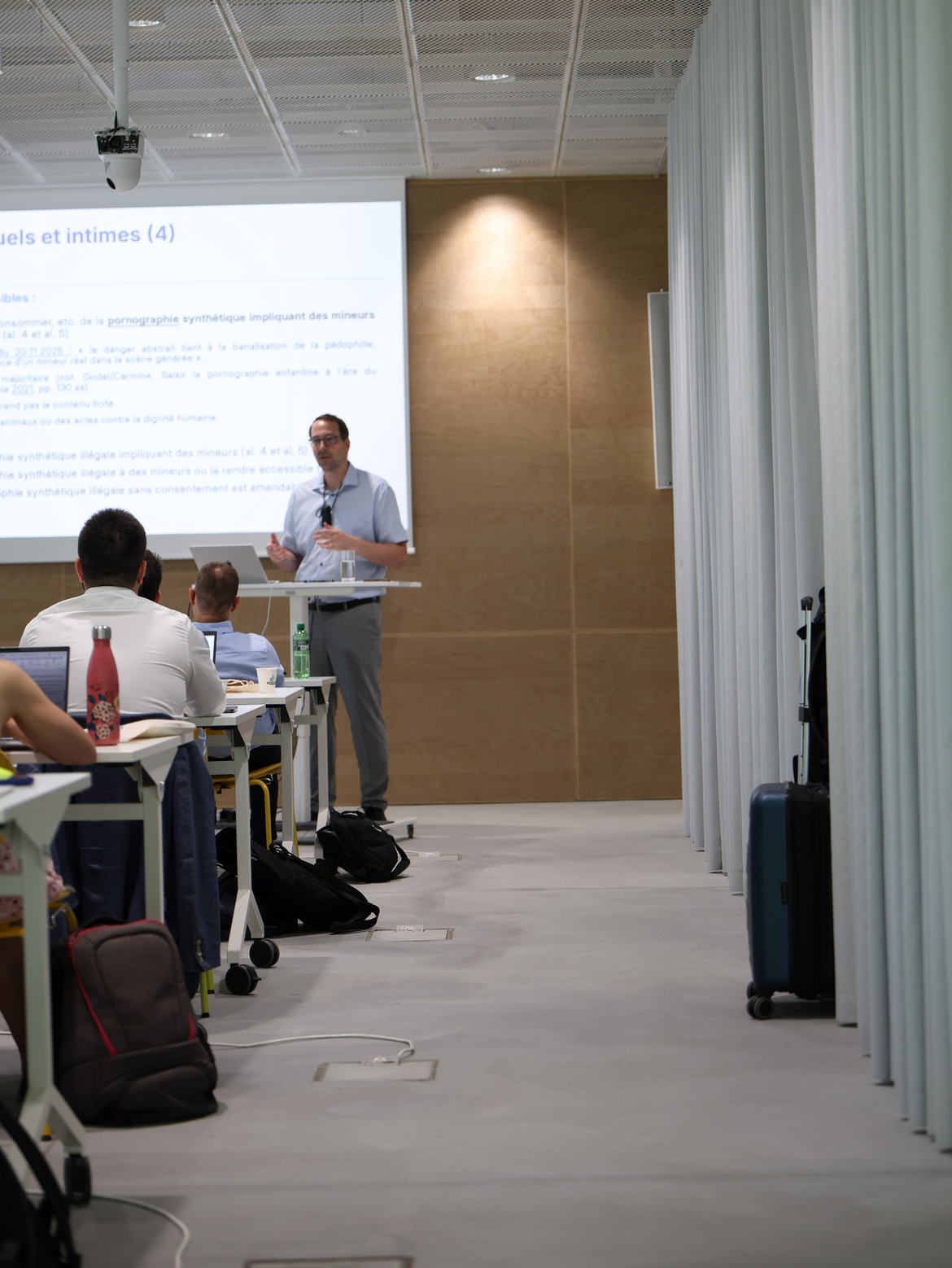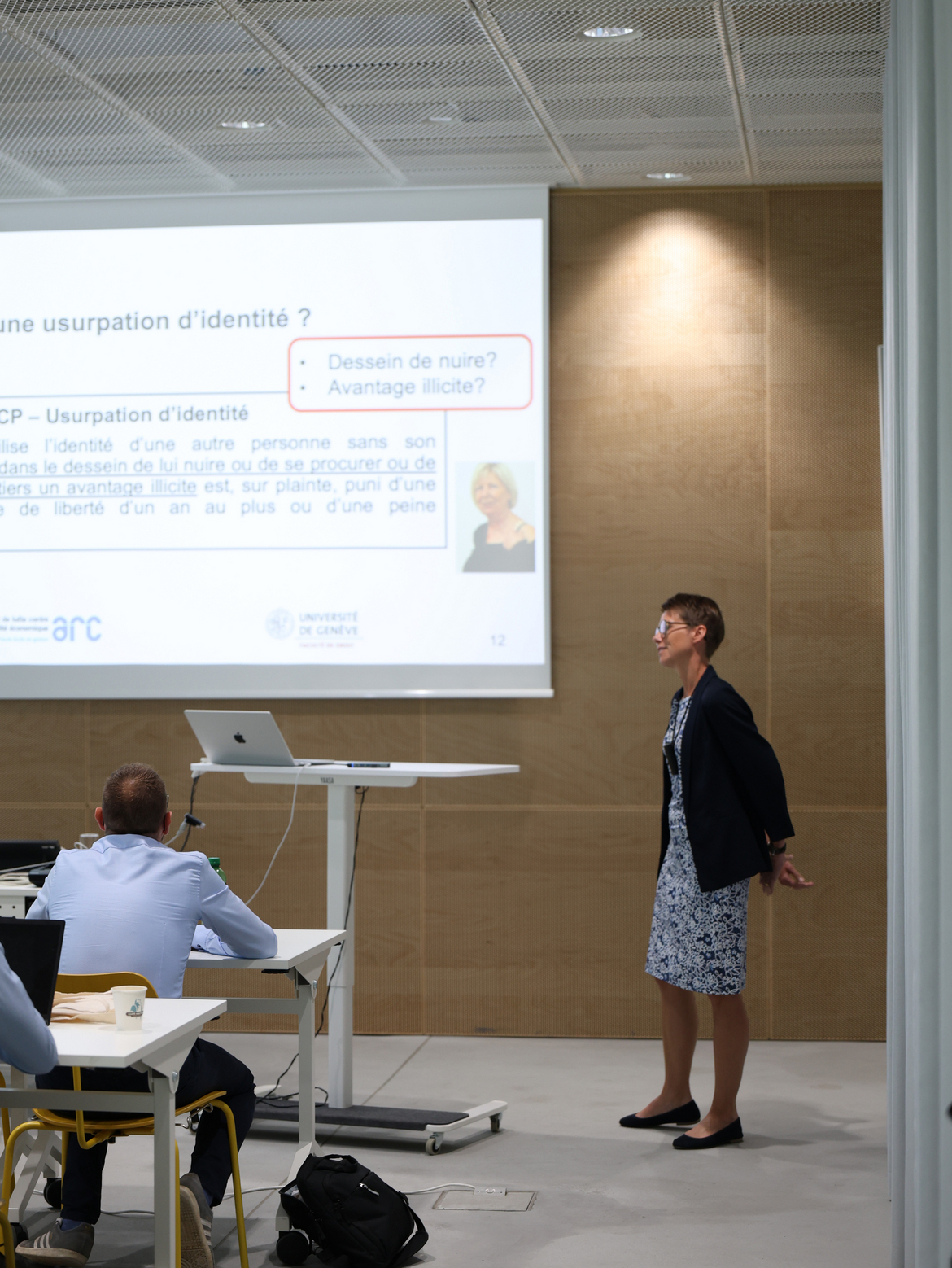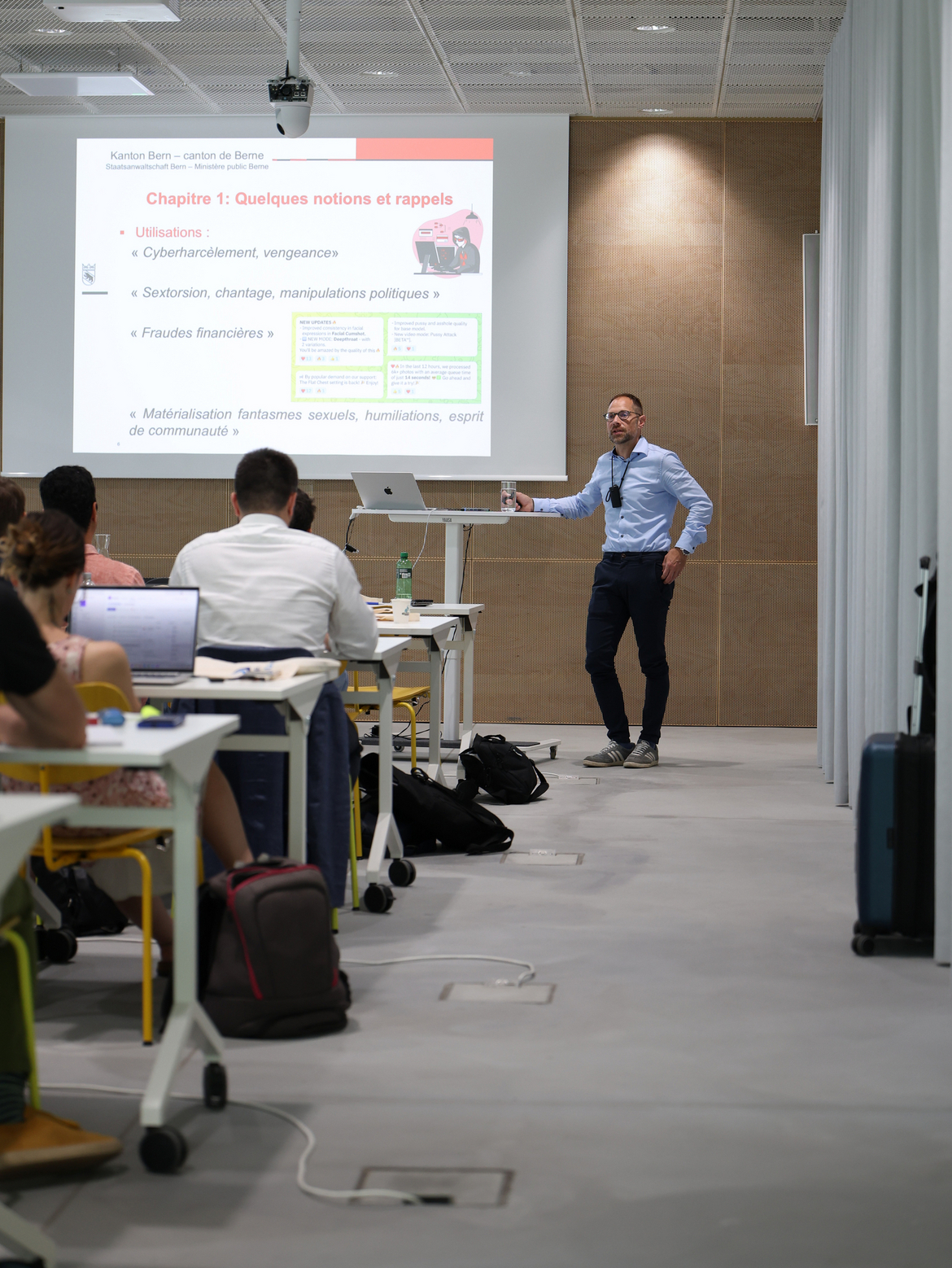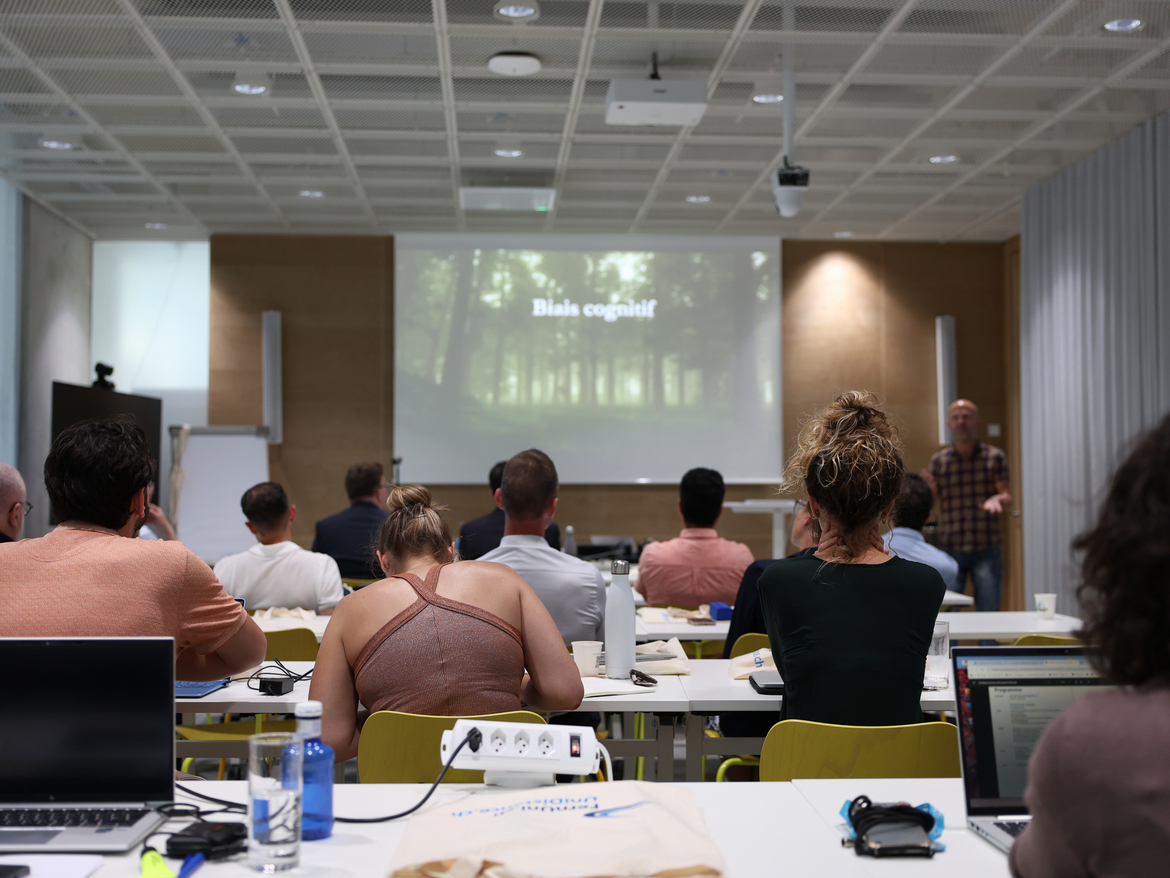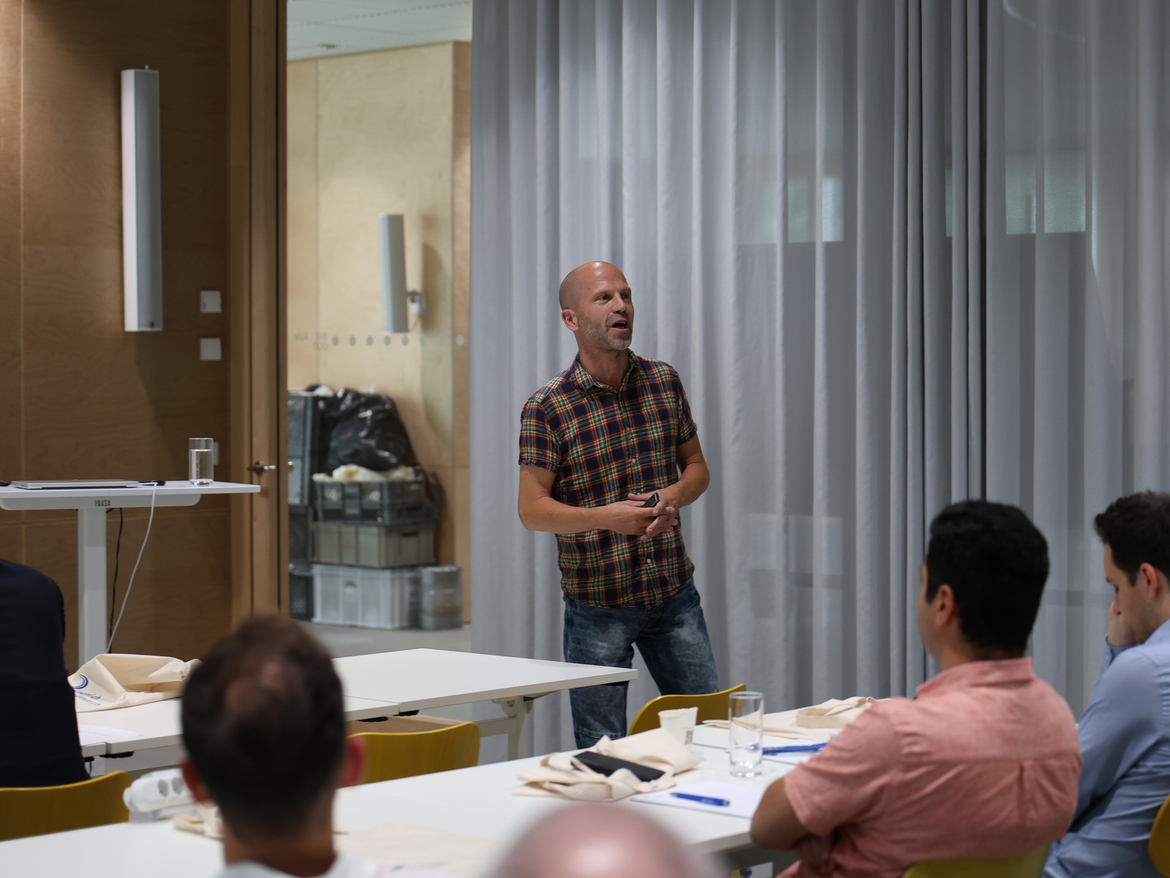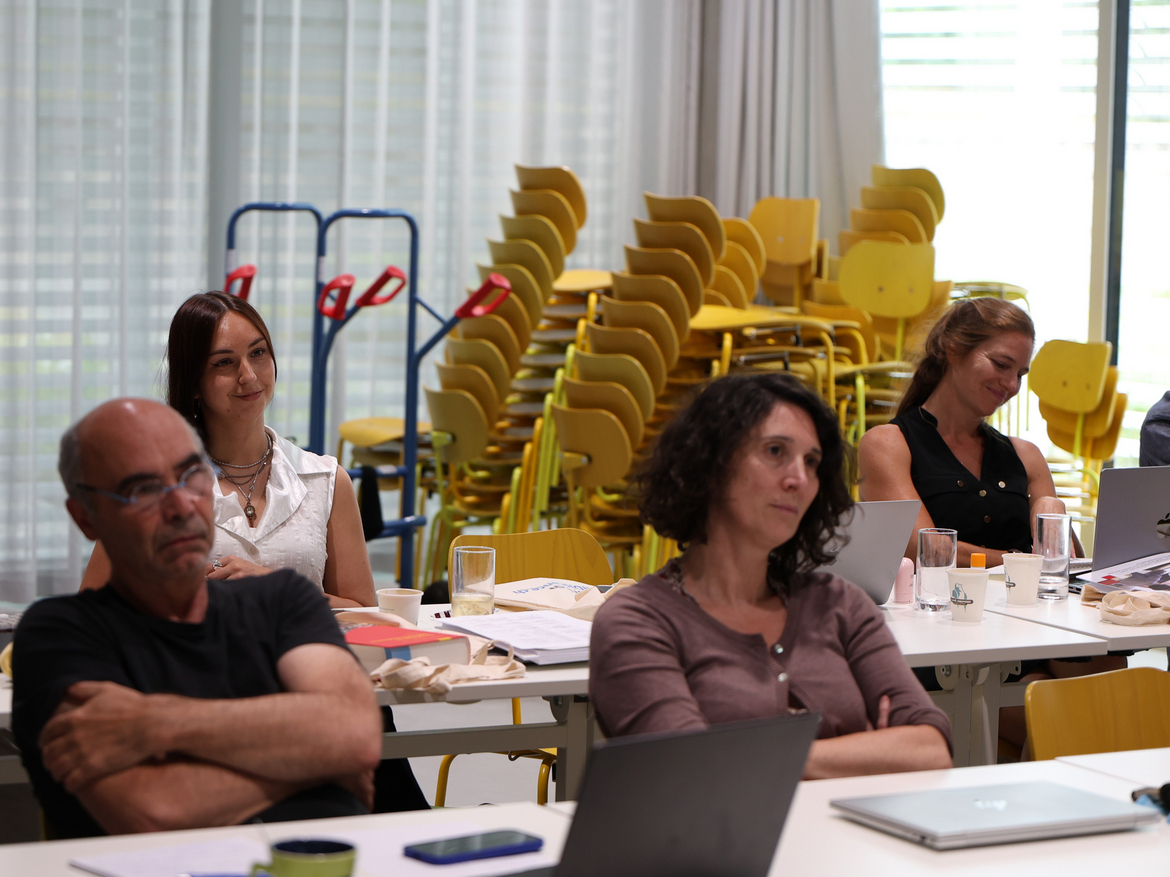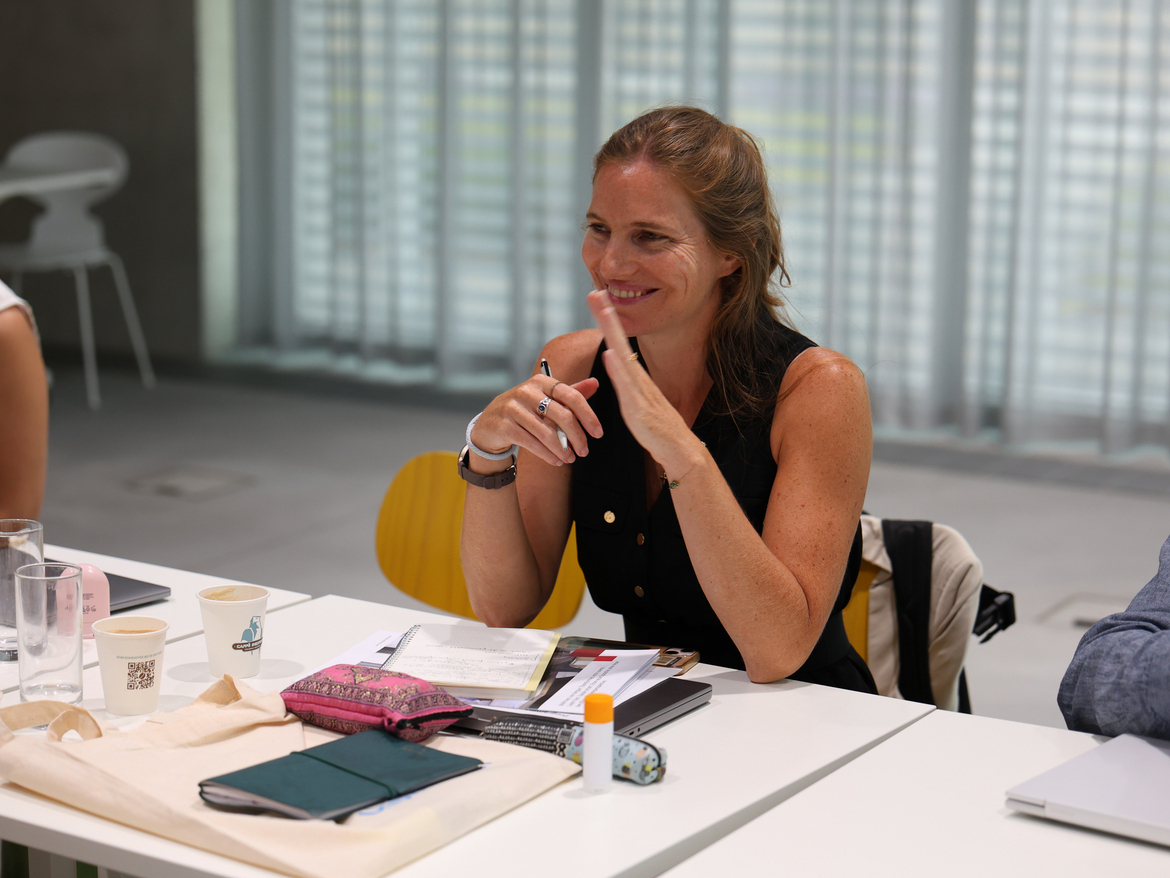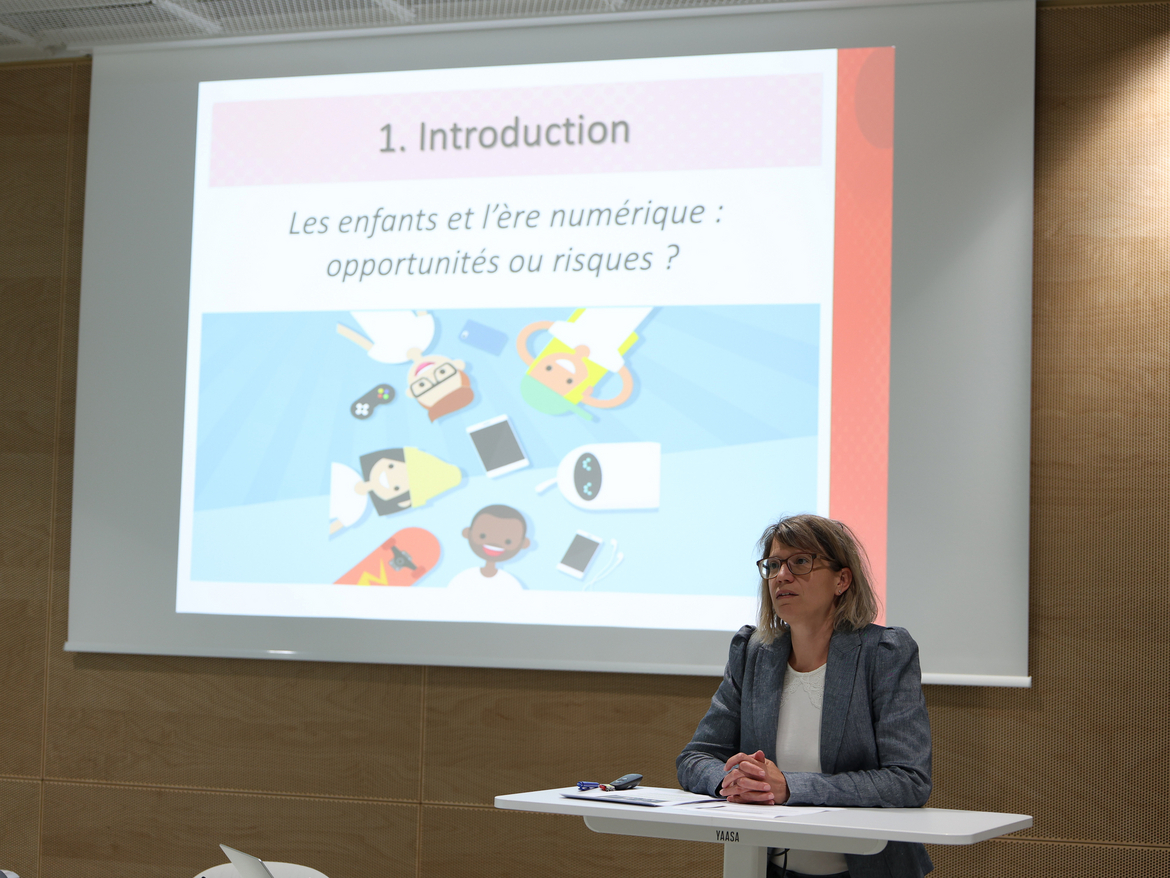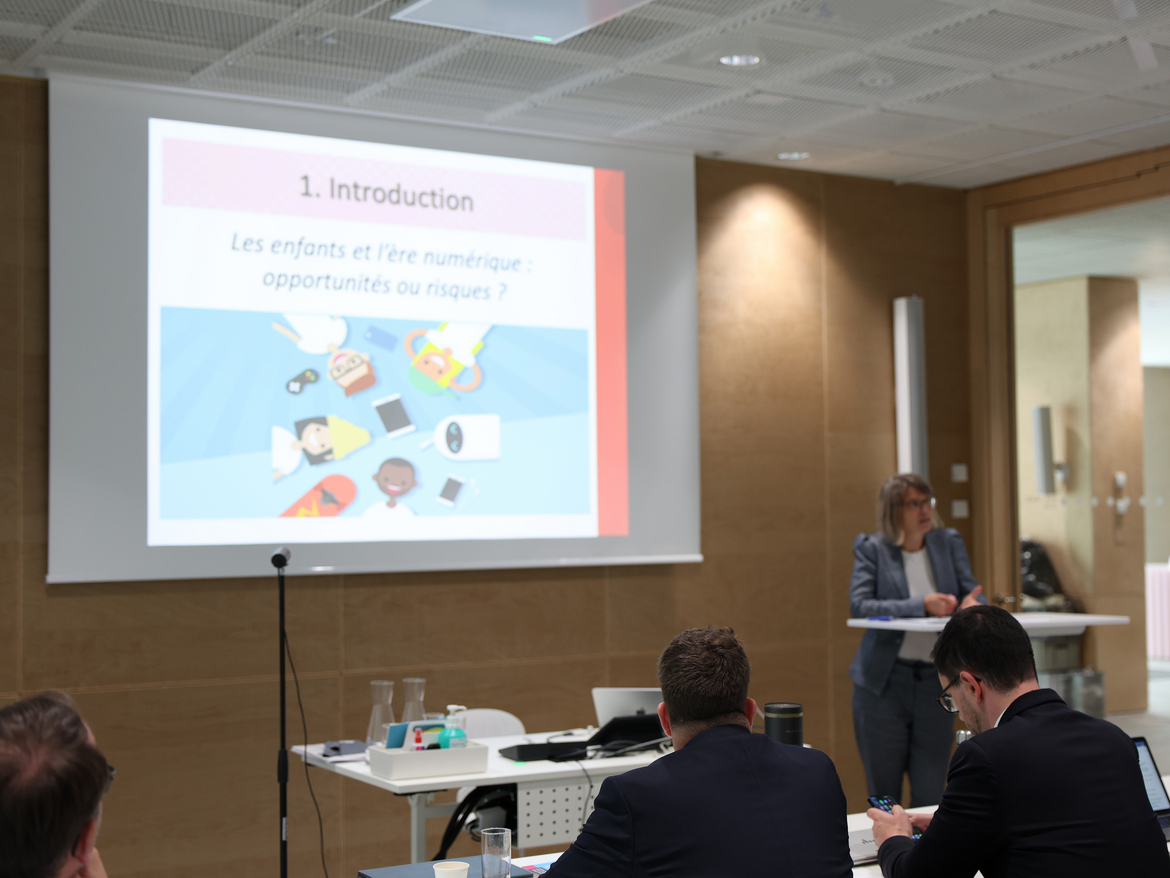
UniDistance Suisse organized the 2nd Valais Criminal Law Day on 19 June 2026, focusing on hyper-manipulated content (deepfakes). Around thirty specialists from French-speaking Swiss universities, the judiciary, and the cybersecurity field took part in this interdisciplinary meeting.

The day opened with a lecture by Prof. Thierry Godel and Me Nicolas Bloque, dedicated to offences related to deepfakes. The speakers provided an overview of the legal issues, particularly the evidentiary value of such content and the difficulties involved in assessing the harm caused by its viral dissemination.

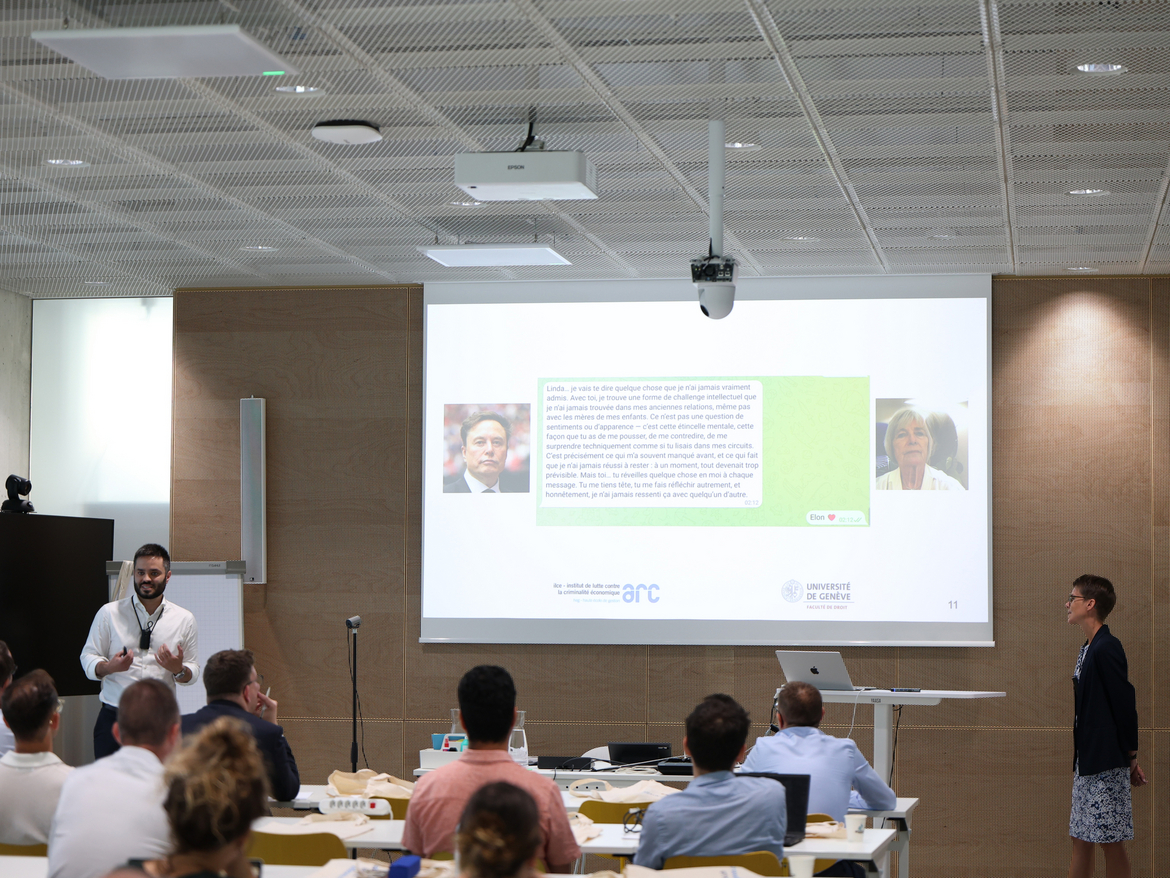
Issues related to fraud and identity theft were then addressed by Prof. Maria Ludwiczak Glassey and Prof. Olivier Beaudet-Labrecque. Their presentation focused in particular on romance scams and forms of digital identity exploitation.

Prosecutor Pierre Voisard presented investigative tools and mechanisms of mutual legal assistance in cases involving illicit synthetic content. He detailed practices for securing digital evidence, ranging from requests to online platforms to forensic data preservation.
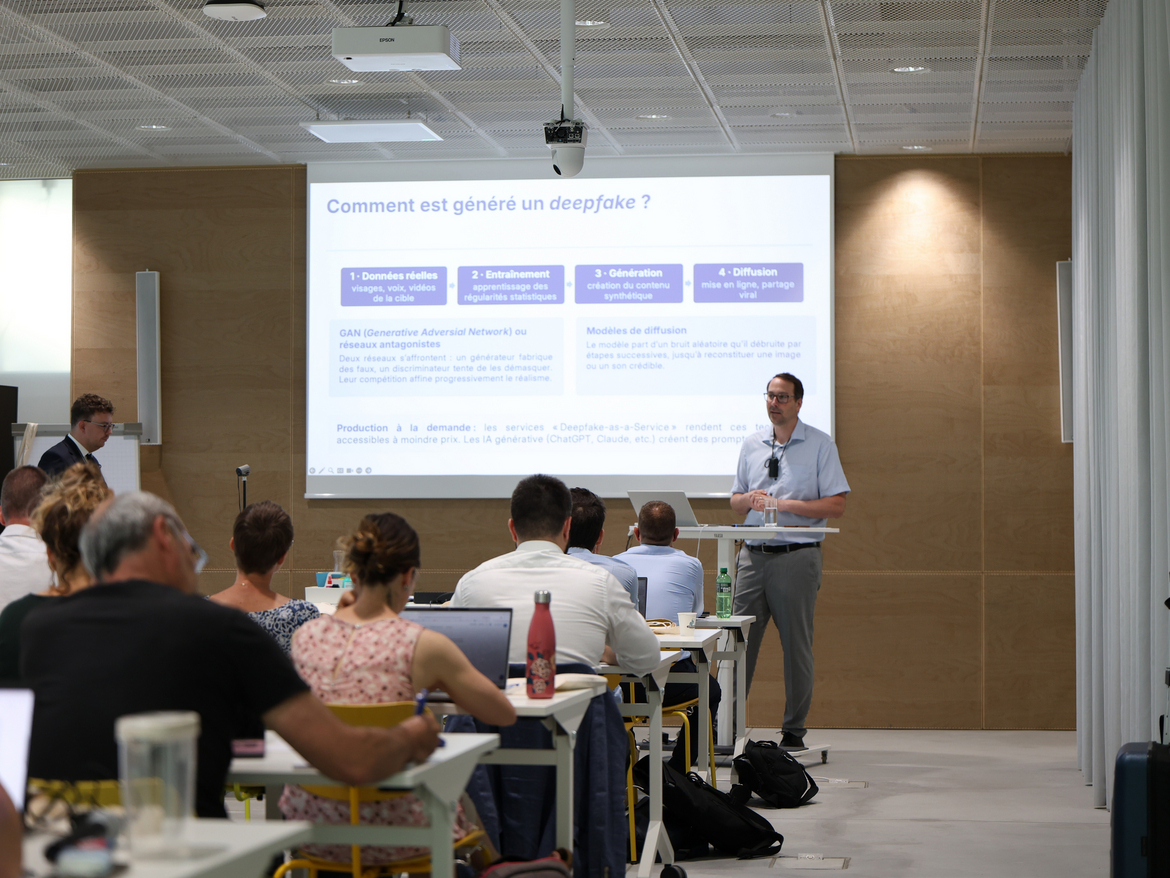
Legal, Technical, and Cognitive Challenges

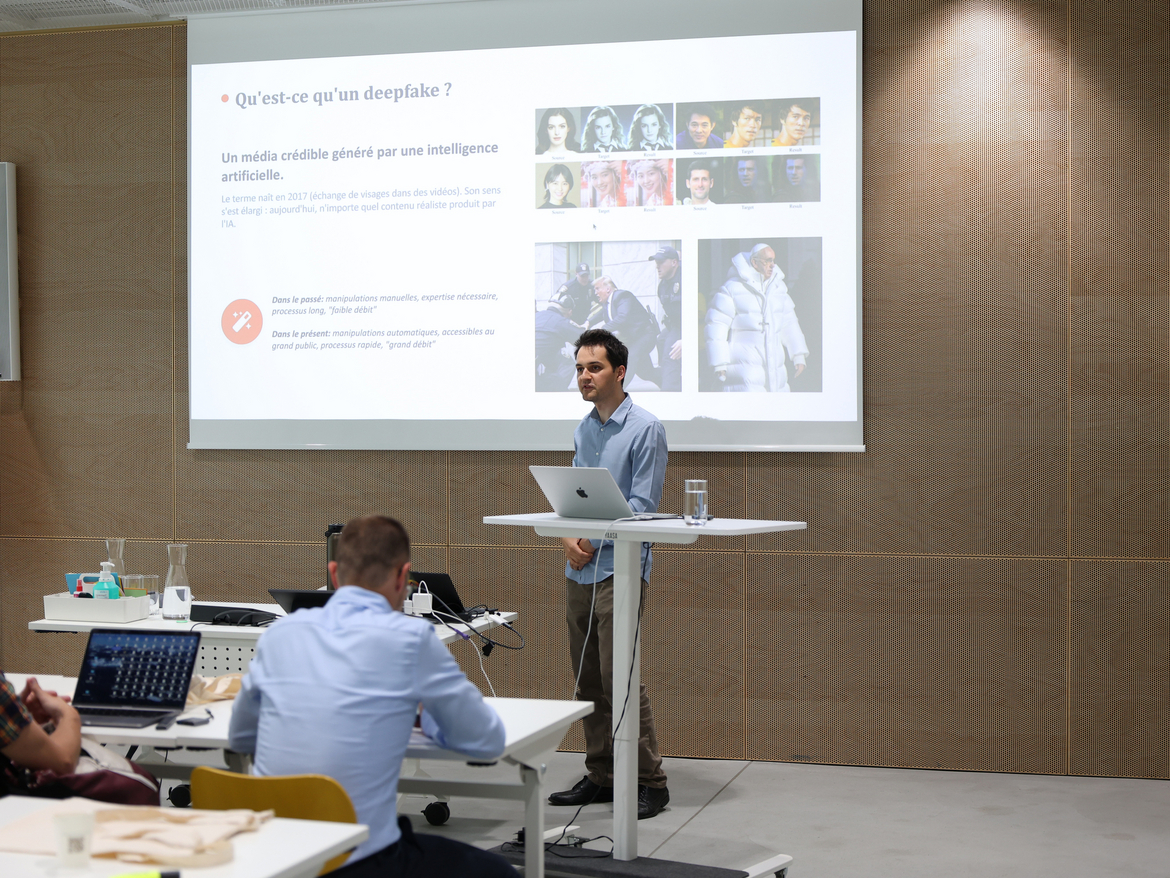
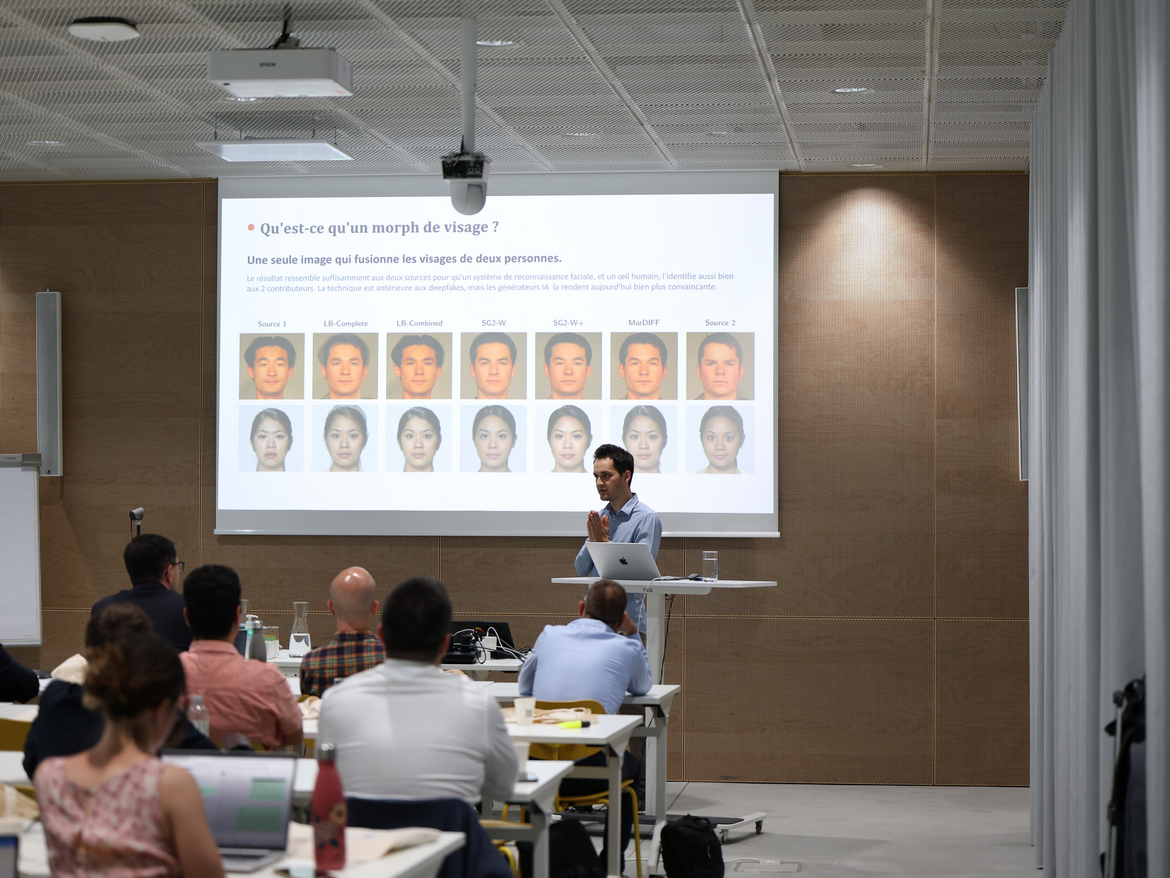
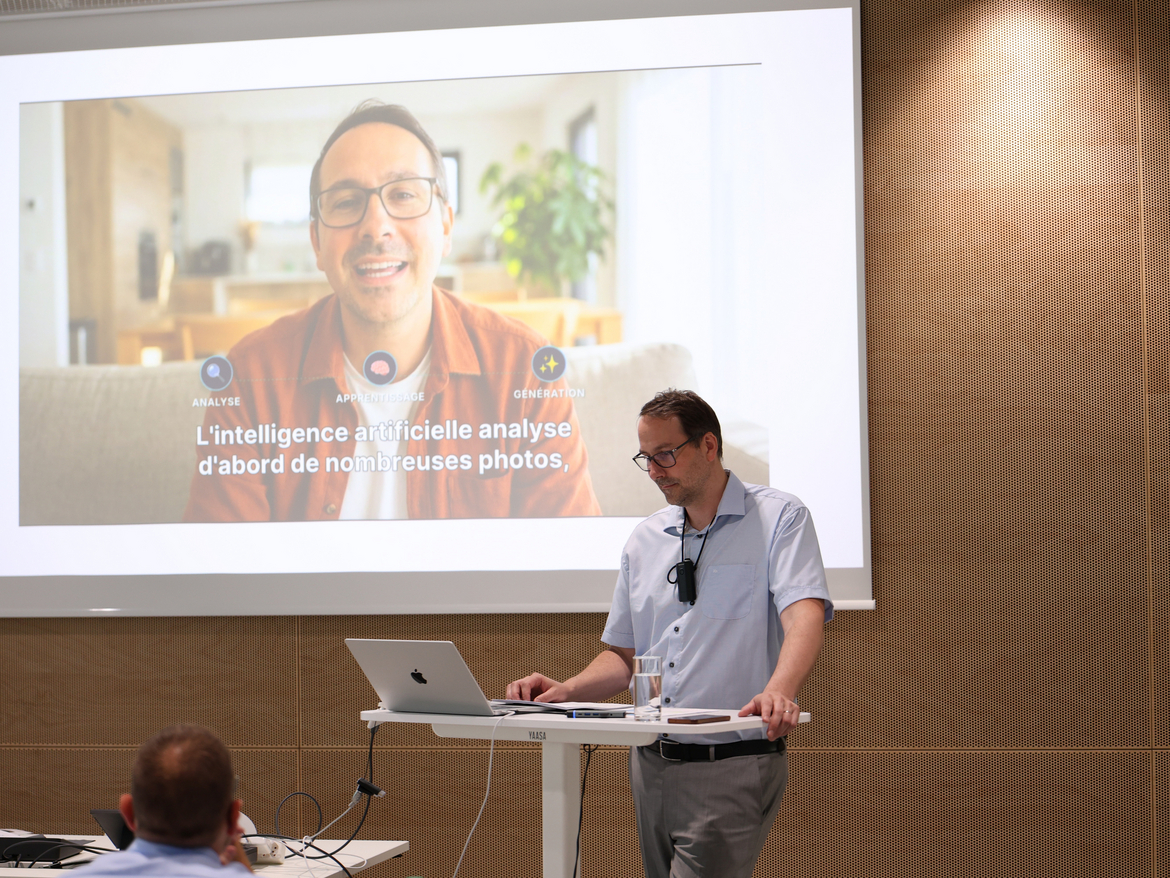
On the technical side, Laurent Colbois, PhD in forensic science and postdoctoral researcher at IDIAP Research Institute, reviewed the state of research on the creation and detection of deepfakes, as well as facial morphing techniques, whose realism continues to improve.

The cognitive dimension was explored by Pascal Wagner-Egger, who analysed the mechanisms of belief in manipulated content. He highlighted the role of cognitive biases in the spread and perceived credibility of misinformation in the age of social media and artificial intelligence.

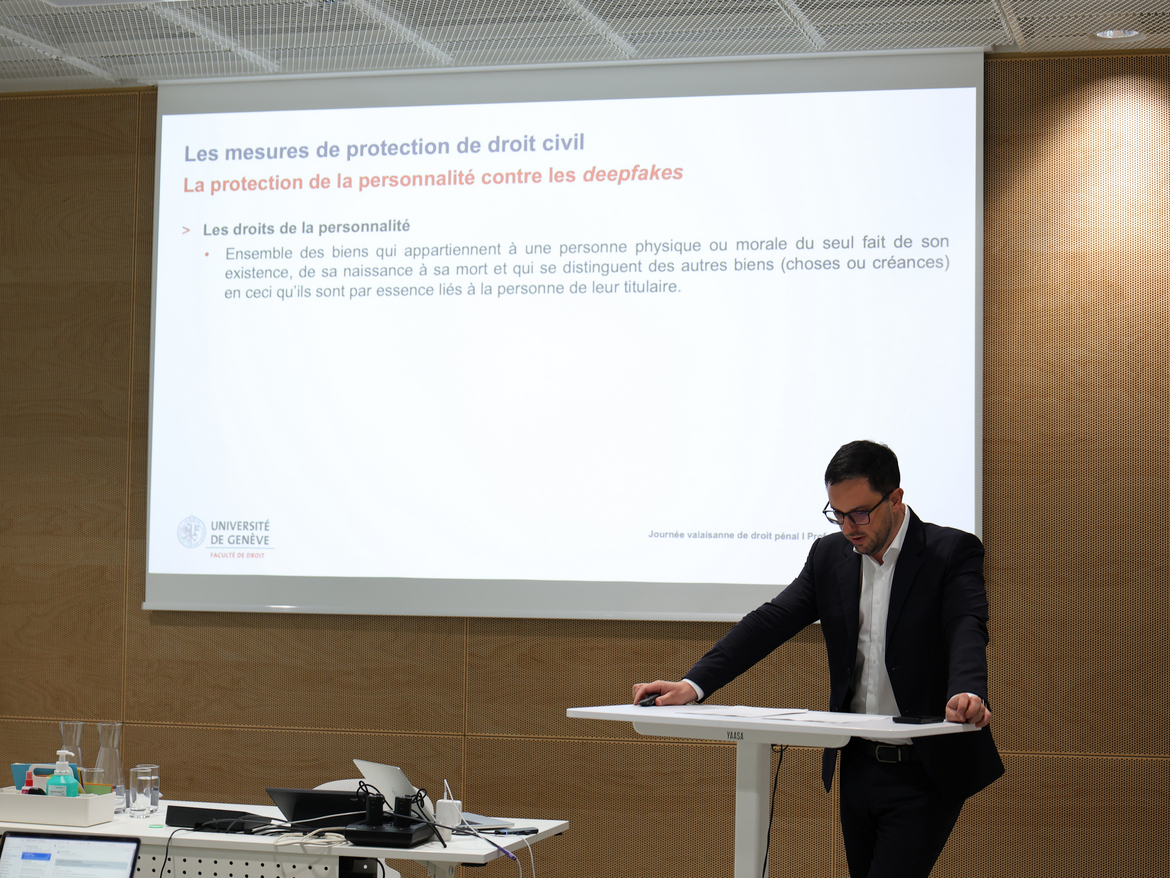
The legal aspects of victim protection were presented by Prof. Laurent Grobéty, who detailed civil law mechanisms in cases of personality rights violations, as well as procedures for their implementation in criminal or civil proceedings.

Finally, Me Aline Sermet addressed juvenile criminal law in the digital era, highlighting the particular vulnerability of young people to risks linked to digital environments, both as victims and as perpetrators.

In preparation for this event, three interdisciplinary webinars had already laid the groundwork for the discussion, featuring contributions on the history of deepfakes, platform regulation, and the economics of disinformation.

Supported by the Faculty of Law, the event highlighted the need for strengthened dialogue between research and judicial practice. The organizing committee praised the quality of the exchanges and emphasized the importance of such meetings for the development of the future University of Valais.

Images