
Conferences
24.06.2026 - 12:00 to 12:45
Intelligence émotionnelle, et si on ne parlait pas de la même chose ?
Online

The belief that regular physical exercise enhances cognition has become so firmly embedded in scientific and public discourse that it is rarely questioned. After almost five decades, the majority of researchers in the field appear to converge on the same optimistic conclusion: the regular practice of physical exercise improves cognition. Yet a closer look at the empirical evidence reveals a more nuanced picture.
This talk presents a critical examination of the exercise-cognition link, drawing on various sources, including an umbrella review of 24 meta-analyses of randomized controlled trials (RCTs) conducted by our research group. Despite the broadly positive findings reported in the literature, our analysis uncovered pervasive methodological limitations, that include underpowered study designs, publication bias, and lack of correction for groups baseline differences. When these sources of bias are addressed, and when active (that control for placebo-like effects) rather than passive control groups are used, the claimed cognitive benefits shrink to negligible levels.
Beyond methodology, the field suffers from deeper conceptual problems. Widespread reliance on the "brain as a muscle" analogy and the reverse inference from structural brain changes to specific cognitive outcomes has allowed intuitive but unsupported narratives to persist. Meanwhile, lifestyle confounders, improved sleep, social engagement, reduced sedentary time, are rarely disentangled from the exercise manipulation itself.
We conclude that the exercise-cognition consensus has run ahead of the evidence. A genuine paradigm shift is needed, one grounded in transparent, pre-registered, multi-laboratory designs, to test novel hypotheses using appropriate methods and sensitive dependent variables. Physical exercise remains unambiguously beneficial for physical health, so the challenge now is to establish whether, and for whom, it also benefits cognition.
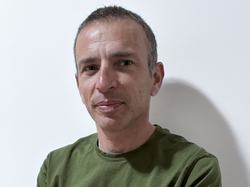
Prof. Daniel Sanabria, Granada University
Daniel Sanabria Lucena is Full Professor at the Department of Experimental Psychology at the UGR. He teaches in the Psychology degree, in the Master in Cognitive and Behavioral Neuroscience and in the Master in Research in Physical Activity and Sport. His research work at CIMCYC seeks to understand cognitive and brain functioning in demanding situations that generate effort and changes in the state of activation (such as high intensity physical exercise), as well as the subjective experience linked to these situations. He is also interested in the relationship between physical/sports performance, cognition and brain functioning, as well as research on attention and perception in general. He is the head of the Human Brain and Cognition research group and the Cognitive and Affects dynamics lab.