
Conférence
06.05.2026 - 12:00 à 12:45
Jeder hat sein Päckchen zu tragen: Warum Stress Ihrem Rücken schadet und wie Sie sich schützen können
En ligne
Researchers have found that up to 70% of our daily memory problems are related to forgetting previously set goals, such as forgetting to buy milk on the way home. This kind of memory is called Prospective Memory, and it is highly important for everyday wellbeing and to keep people functioning as independently as possible in their lives. Prospective memory is not only associated to memory but also to executive functioning, cognitive control, and attention. As such, it is an everyday competence that is relevant across the entire lifespan from childhood to older age.
In this talk, I will discuss different approaches to train prospective memory focusing on restorative and compensatory trainings. Furthermore, I will present new digital avenues using Virtual Reality to train prospective memory in older adults and children with ADHD. To do so, we developed a Virtual Reality based environment called Virtual Day that simulates real life with different daily goals to perform.
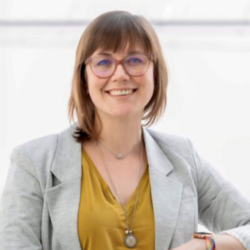
Prof. Alexandra Hering is an Assistant Professor in Developmental Psychology at Tilburg University. She previously worked at the University of Geneva as a lecturer and research group leader. Her research focuses on lifespan development and goal-directed behaviour, with a particular emphasis on prospective memory - the ability to remember to carry out intentions in the future.
Her work aims to understand how goal-directed behaviour evolves from childhood to older age, how it is shaped by cognitive functions such as working memory as well as contextual factors like emotions and mood, and how it can be supported through cognitive training to counteract age-related challenges. To address these questions, she combines behavioural methods with electrophysiological measures (EEG) to investigate the underlying neural mechanisms.