Autism Spectrum Condition (ASC) affects many individuals in Switzerland and places substantial demands on care systems and families. Difficulties in emotion regulation are common in autism and are associated with anxiety, depression, and challenging behaviors, potentially stemming from rigid emotion regulation.
Adaptive strategies such as humor may promote emotional flexibility and positive outcomes, yet their neural mechanisms remain poorly understood. Different types of humor—humor focusing on the stressor (humorous reappraisal) or humor focusing on something else (humorous distraction)—may have distinct benefits depending on the context. However, although promising, humor can be difficult to generate independently, particularly during negative emotional states.
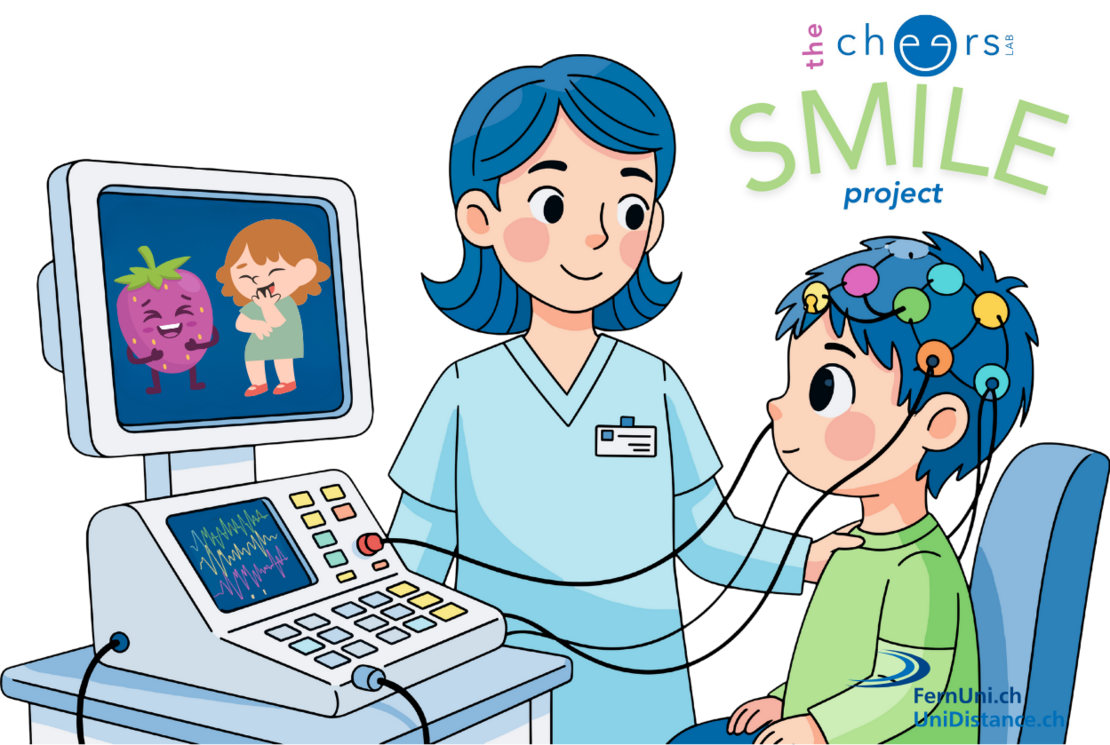
The SMILE project, led by Prof. Andrea Samson at UniDistance Switzerland, investigates how humor-based ER strategies can support emotional regulation and well-being in autistic youth. Using electroencephalography (EEG), the project will examine the neural mechanisms underlying humor-based coping strategies, comparing self-generated humor with humor provided by others. By identifying the neural bases of flexibility in humor-based ER, the project aims to provide new insights into how humor can foster emotional flexibility, resilience, and mental health in children and adolescents with autism, ultimately informing future interventions.