mardi 08 septembre 2026
16:30 - 17:30
Room B18.003 and online, Schinerstrasse 18, 3900 Brig


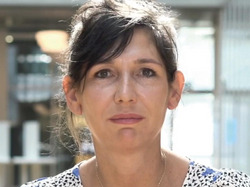
Talk by Catherine Thevenot, University of Lausanne.

In the first study I will present, 192 children were observed solving addition problems from the age of 4½ to 7½ across seven testing points. Virtually all children used their fingers at some point during the study, and most non-finger users by age 6½ were in fact former finger users. Importantly, these children showed higher arithmetic performance than both current finger users and genuine non-finger users of the same age. This provides initial empirical evidence that finger counting is associated with later efficient mental arithmetic. In a second study with 65 children aged 6½, tested twice six months apart, we compared patterns of addition solution times before and after internalization and found them to be strikingly similar. Together with the results of a third study involving both children and adults, I will argue that, at least for certain types of addition problems, the transition from novice to expert performance consists of a progressive internalization of counting strategies leading to automatization, possibly supported by embodied processes.

Sign-up below to receive the Zoom link.

Speaker

Professor Catherine Thevenot is a developmental psychologist at the University of Lausanne (UNIL). Her research focuses on the development of mathematical skills from early childhood to adulthood. Amongst many contributions, she is known for challenging the prevailing view that adults solve simple arithmetic problems (such as 3 + 4) by retrieving answers directly from memory, instead proposing that they continue to rely unconsciously on counting procedures.
She earned her PhD in Psychology from the University of Bourgogne in 2000. After completing two postdoctoral positions at the University of Sussex in Brighton (UK), she obtained a lecturer position in Paris in 2004 and then in Geneva in 2006. Since 2015, she has held a professorship at the Institute of Psychology of the University of Lausanne, where she was promoted to full professor last year. Her recent research activities include a six-month stay at University College London last year, during which she initiated a collaborative project on finger counting in children with Down and Turner syndrome.

Inscription

Autres événements